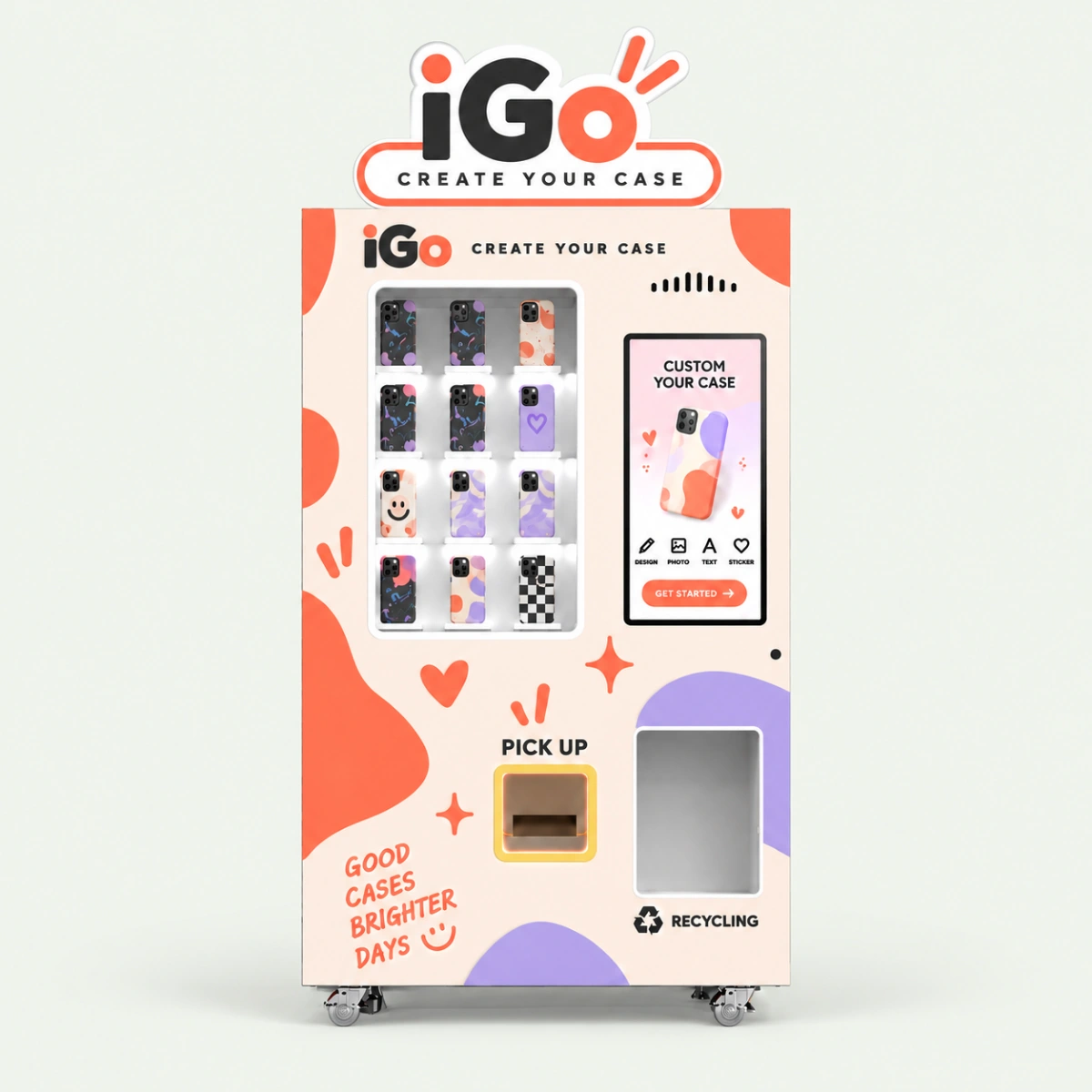
Self-Service from Start to Finish
Customers complete the full customization process independently, from product selection to final pickup.
 iGo Kiosk
Turn personal ideas into wearable products — automatically.
Give customers a complete self-service customization experience in one kiosk.
They can choose a product and size, upload or create a design, complete payment, watch the machine print, and collect a finished garment in its gift box — without staff operating the machine.
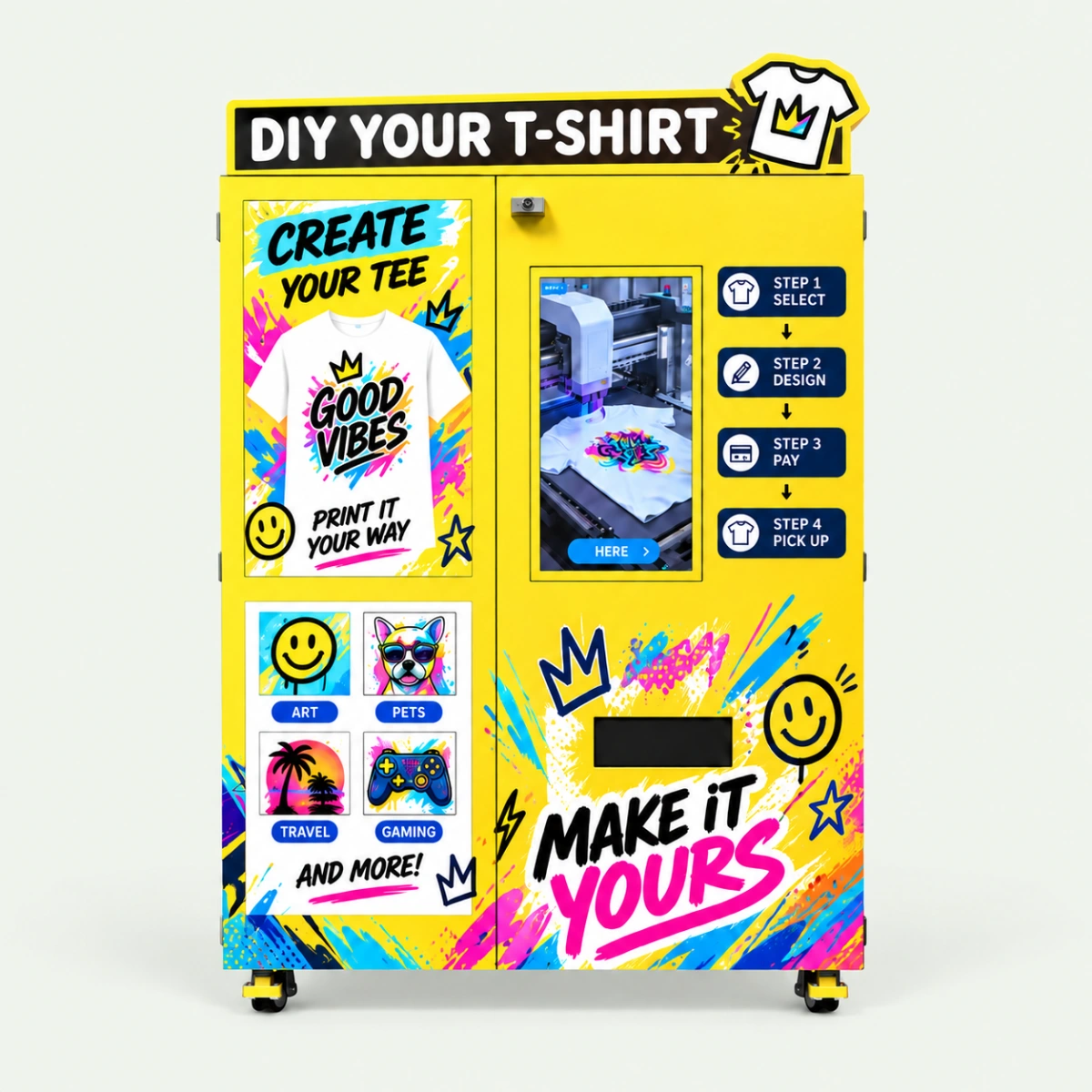
From design and payment to printing and pickup, the full customer journey happens inside one compact kiosk.
Customers complete the full customization process independently, from product selection to final pickup.
Five independent channels can be arranged by size or compatible product type.
A typical T-shirt order can be completed in around four minutes, depending on artwork and operating conditions.
Customers can upload images from their phone, use built-in designs, add text, or use supported AI image tools.
Card readers, bill acceptors and compatible local payment solutions can be configured according to the destination market.
Monitor sales, inventory, ink status and equipment alerts through the management system.
From idea to finished product, customers complete the entire process through the touchscreen and their phone.
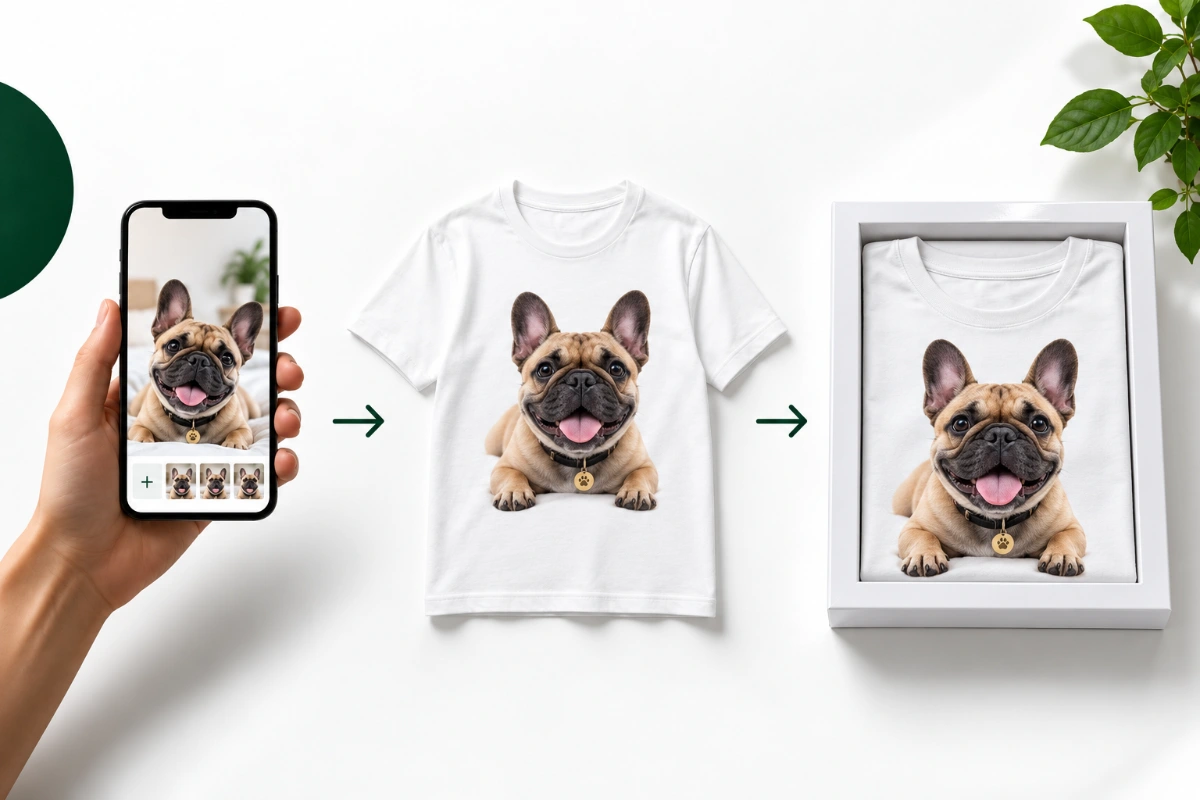
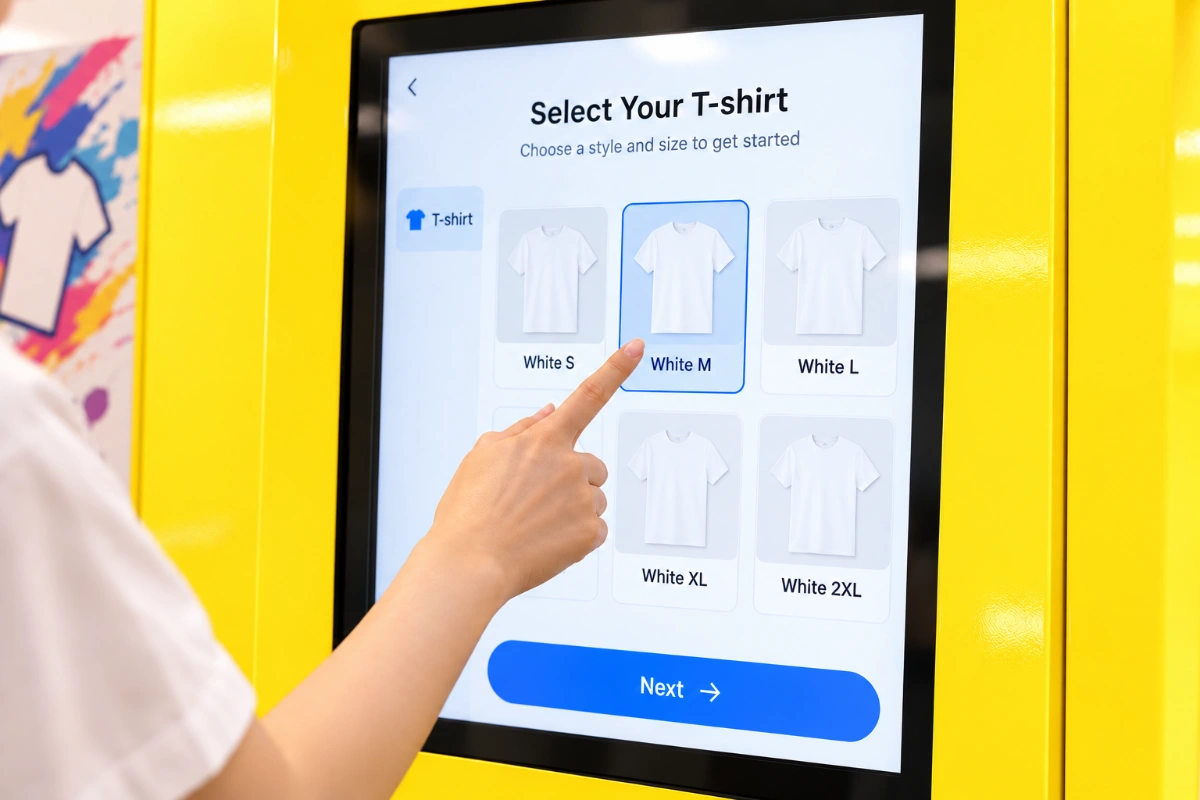
Select the available garment and preferred size from the touchscreen.
The five independent channels can be configured with different sizes or compatible products according to your operating plan.
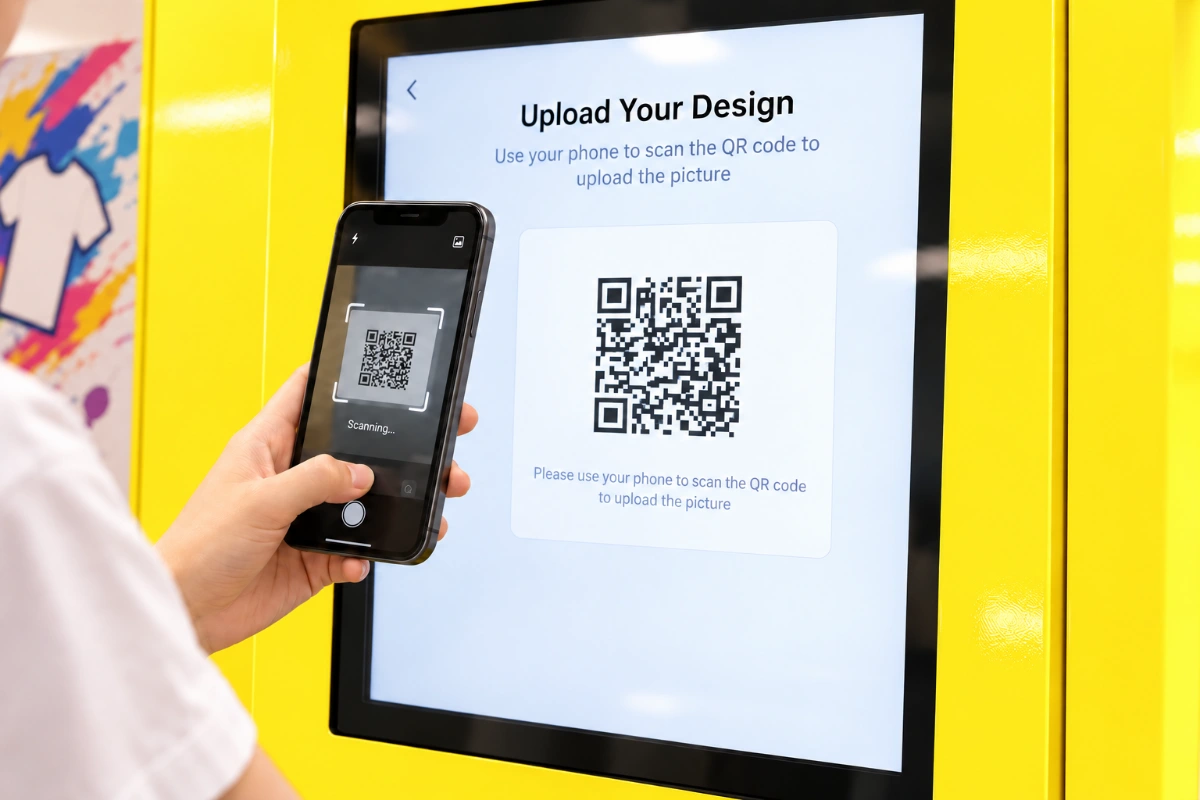
Scan the QR code with a phone and upload a JPG or PNG image.
Customers can also start with designs from the built-in gallery.
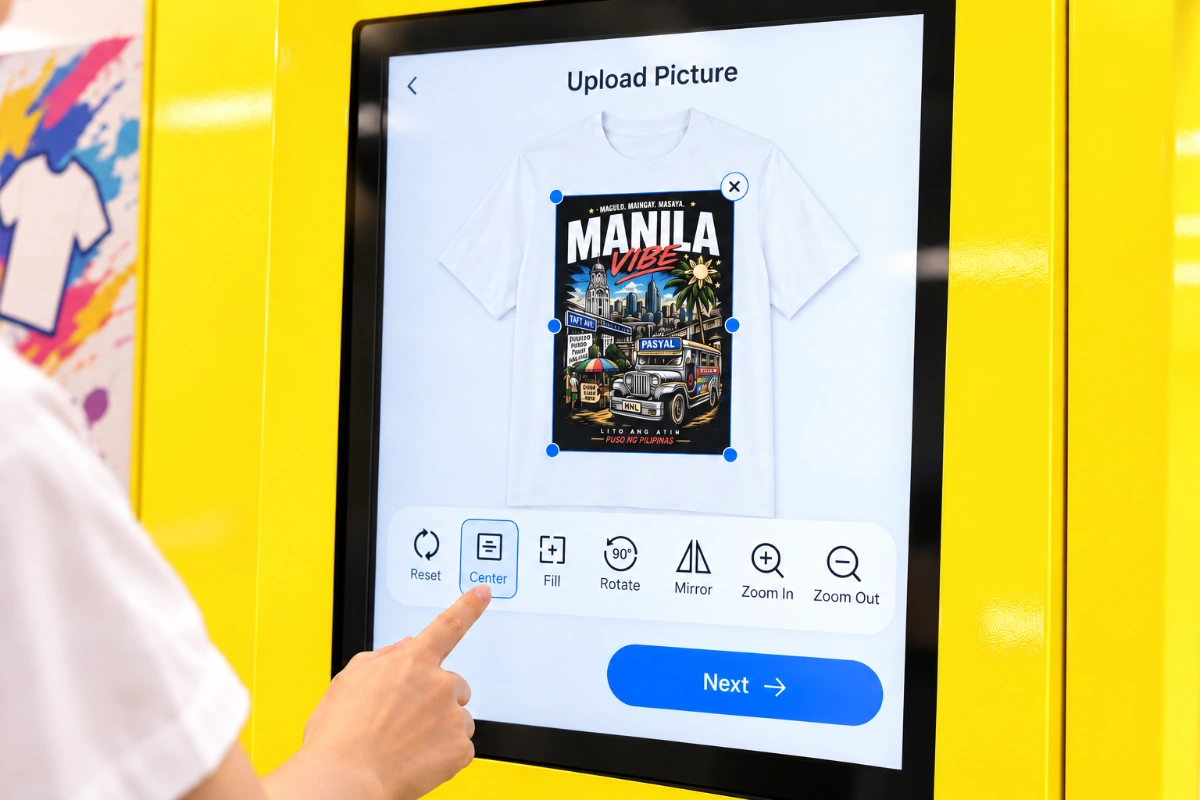
Adjust the artwork on screen, add text, choose gallery designs, or use supported AI tools such as image beautification, anime-style transformation and sketch effects.
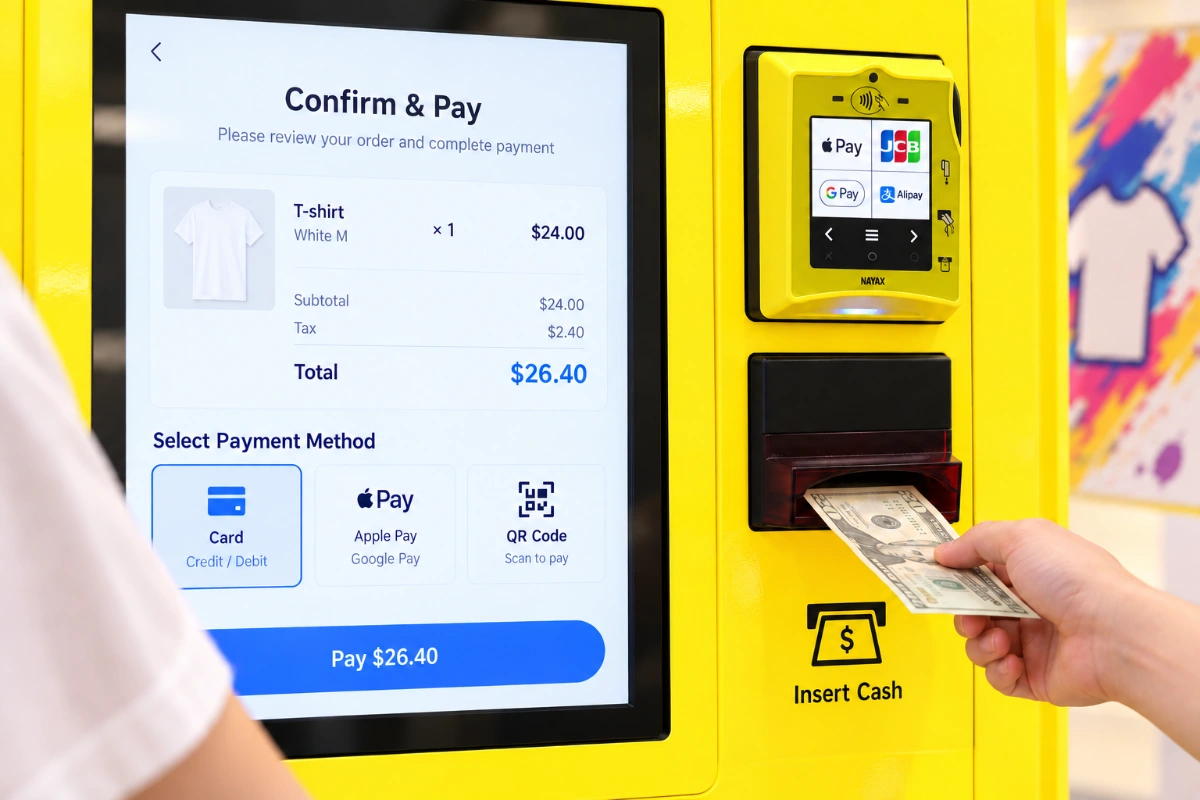
Review the final product, artwork and size, then complete payment using the configured payment method.
Payment hardware and services are selected according to the destination market.
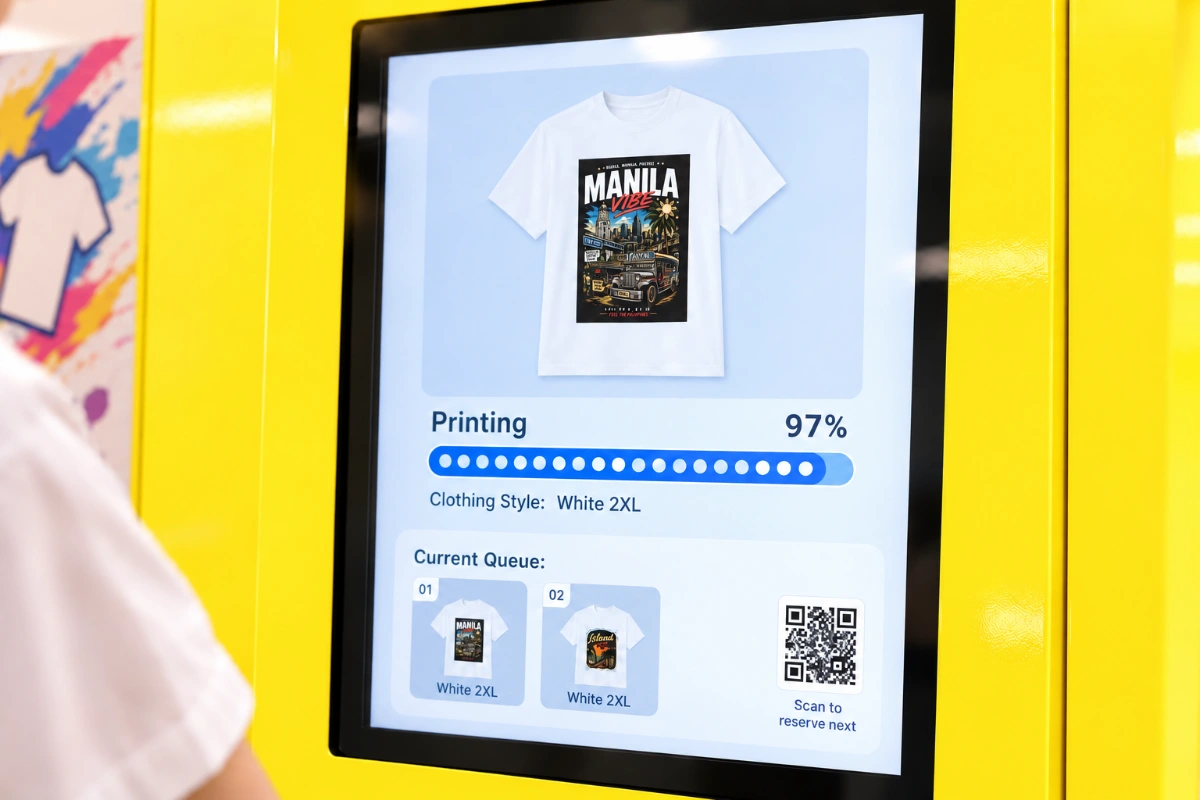
The kiosk automatically prints the design onto the prepared garment using UV printing technology.
A typical T-shirt order takes approximately four minutes.
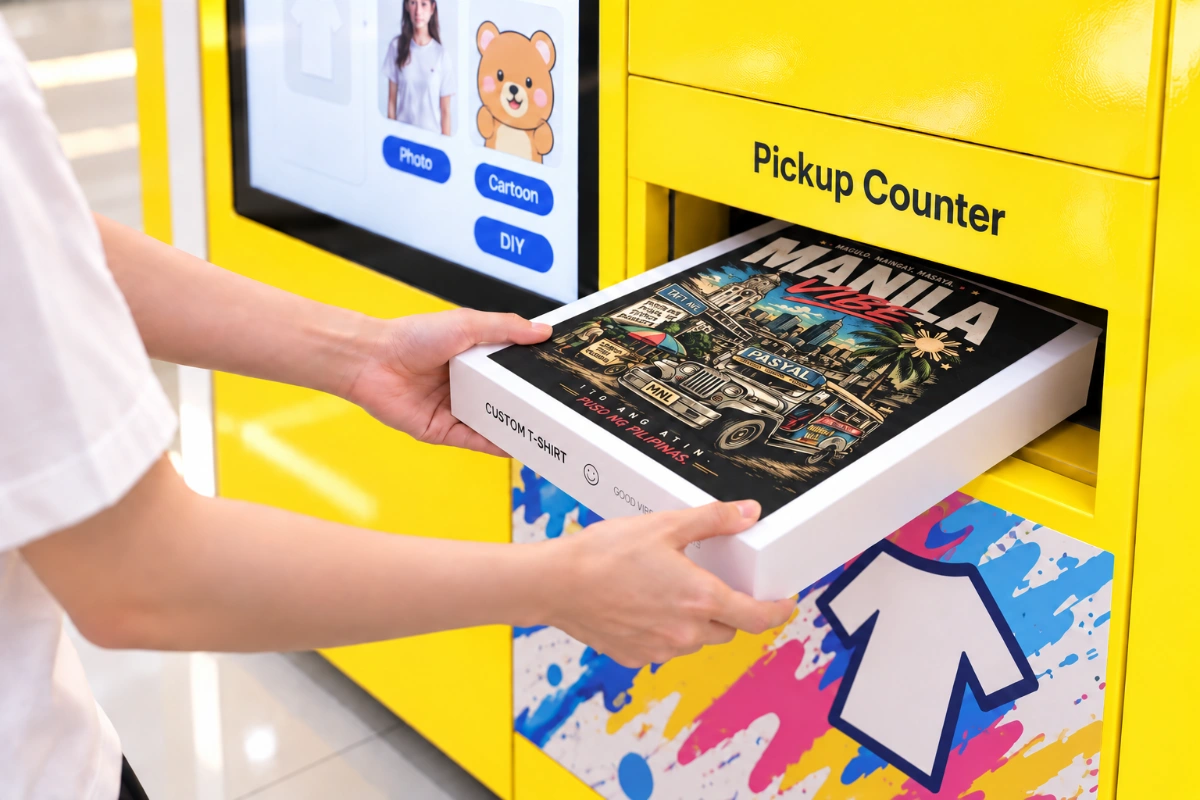
The garment is delivered in its matching gift box and can be collected directly from the pickup area.
Take a closer look at how the T-Shirt Printing Kiosk works in real operation.
The kiosk can be configured for compatible apparel and textile products.
For the current workflow, white garments are recommended to achieve consistent print results.

The core application for everyday personalization, gifts, travel souvenirs, fan merchandise and event products.
Available fabric options include cotton, Sorona blends and polyester.

Suitable for souvenirs, gifts, events and lifestyle products.
Bag dimensions, folding method and packaging compatibility should be confirmed before loading.

A strong seasonal option for colder markets and winter campaigns.
Fabric thickness and folded dimensions affect channel capacity and packaging configuration.
Clear source images, stable printing and the right fabric work together to create a better finished product.
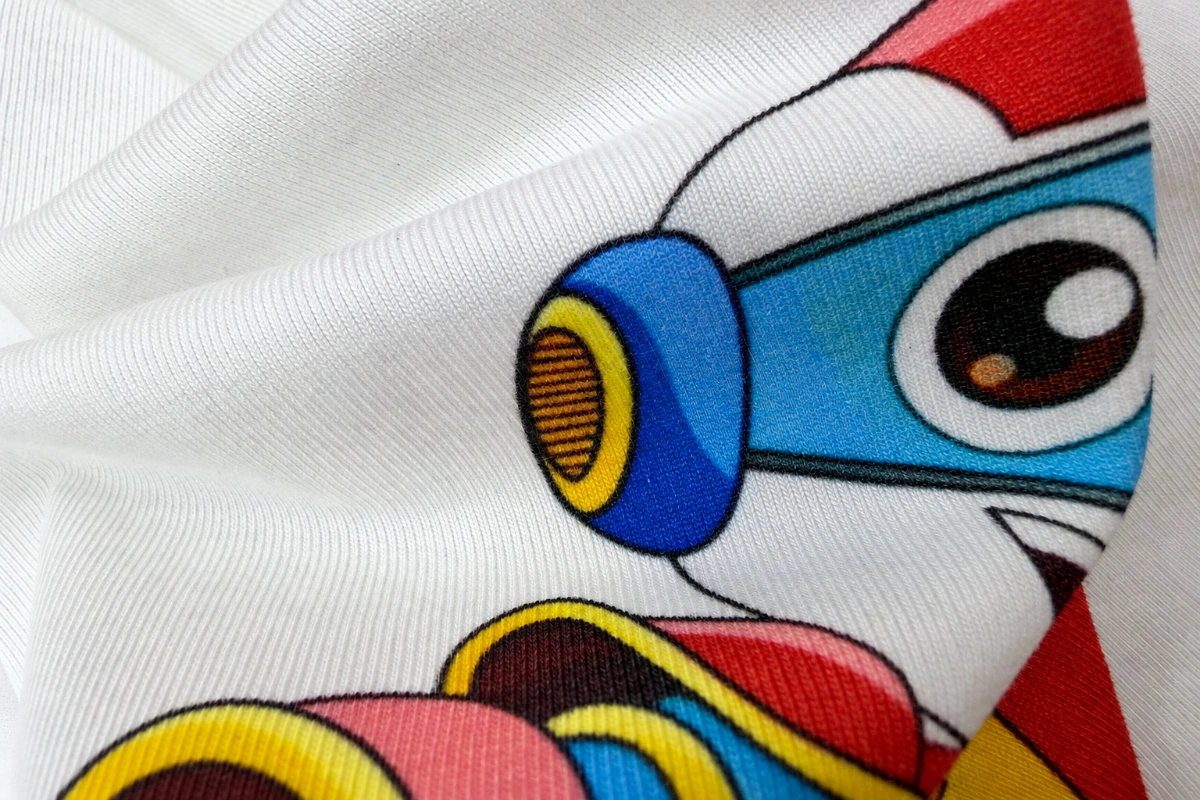
The sharper the original artwork, the more detail the final print can reproduce.
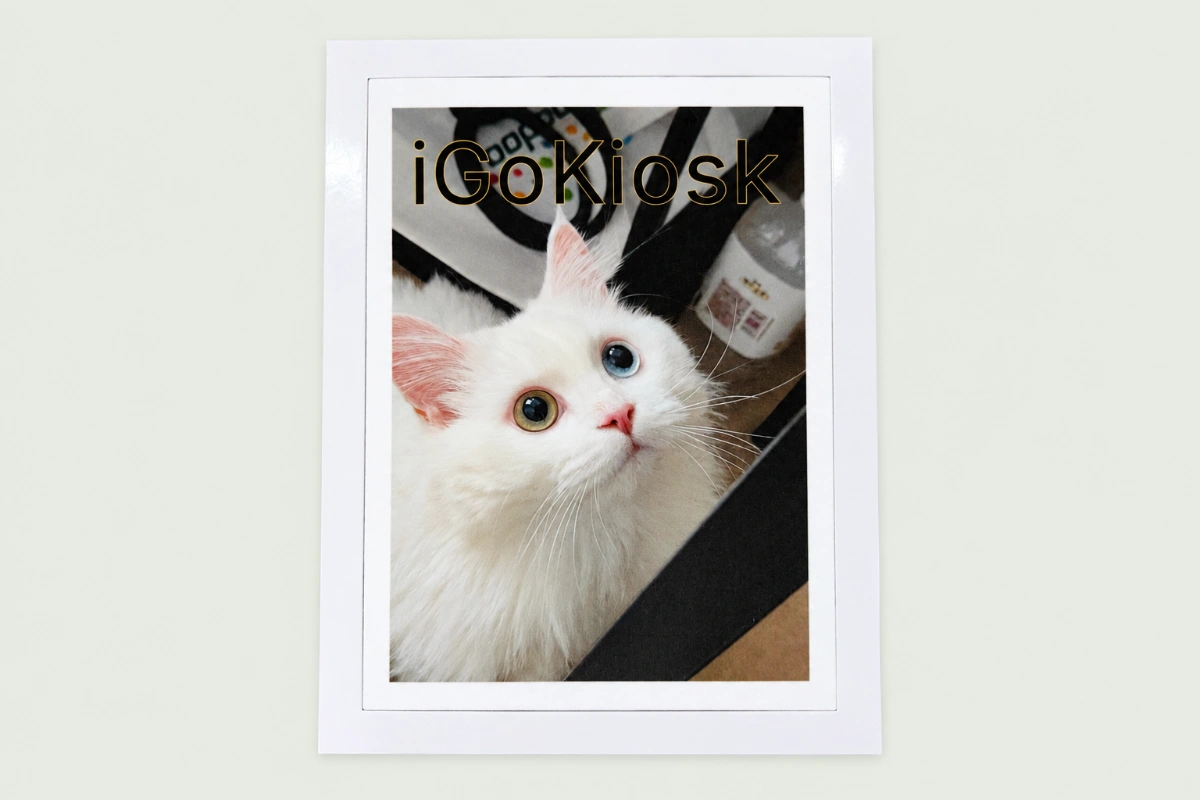
The UV printing system is designed to reproduce colorful photos, illustrations, text and personalized artwork with strong visual clarity.
High-resolution source artwork produces the best result.
Very low-resolution or heavily compressed images may reduce visible detail in the final print.
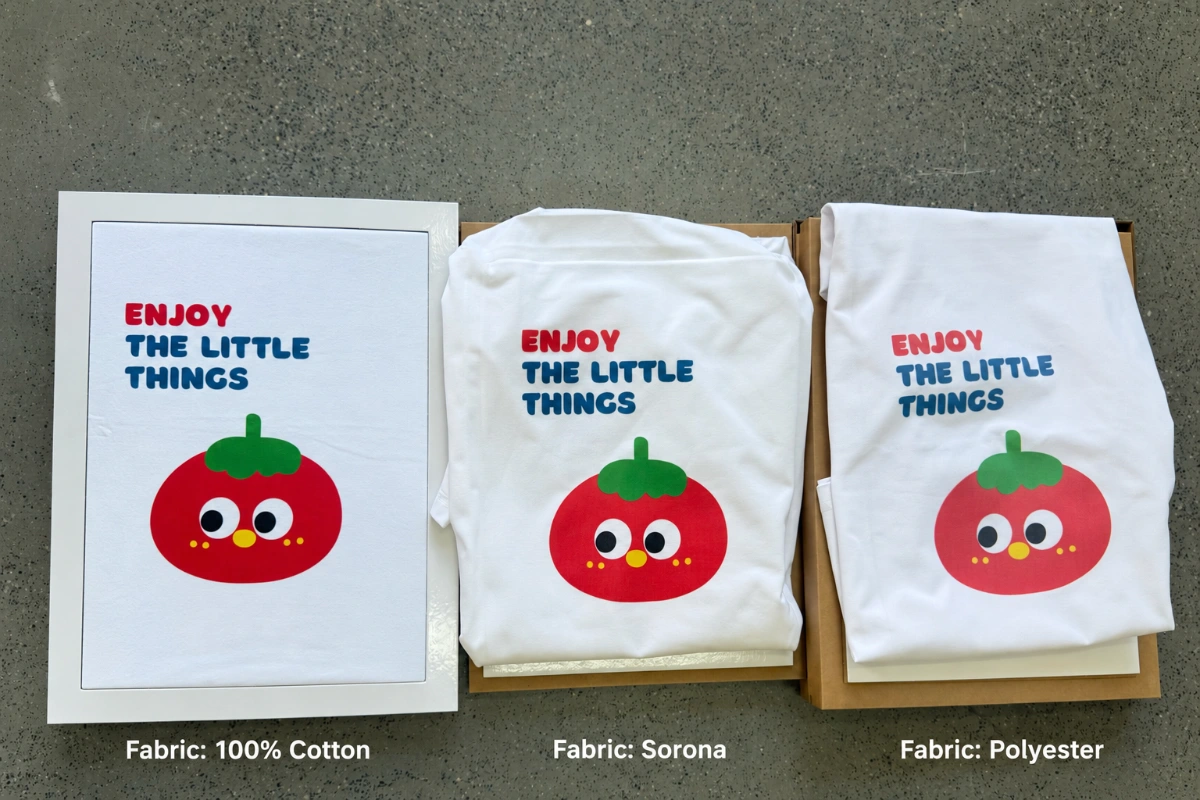
Print appearance varies by fabric structure and surface.
Based on current product testing, the overall visual result is generally:
Sorona → Cotton → Polyester
Sorona provides the strongest overall print presentation, while cotton balances natural hand feel with strong print quality. Polyester provides a more economical alternative.
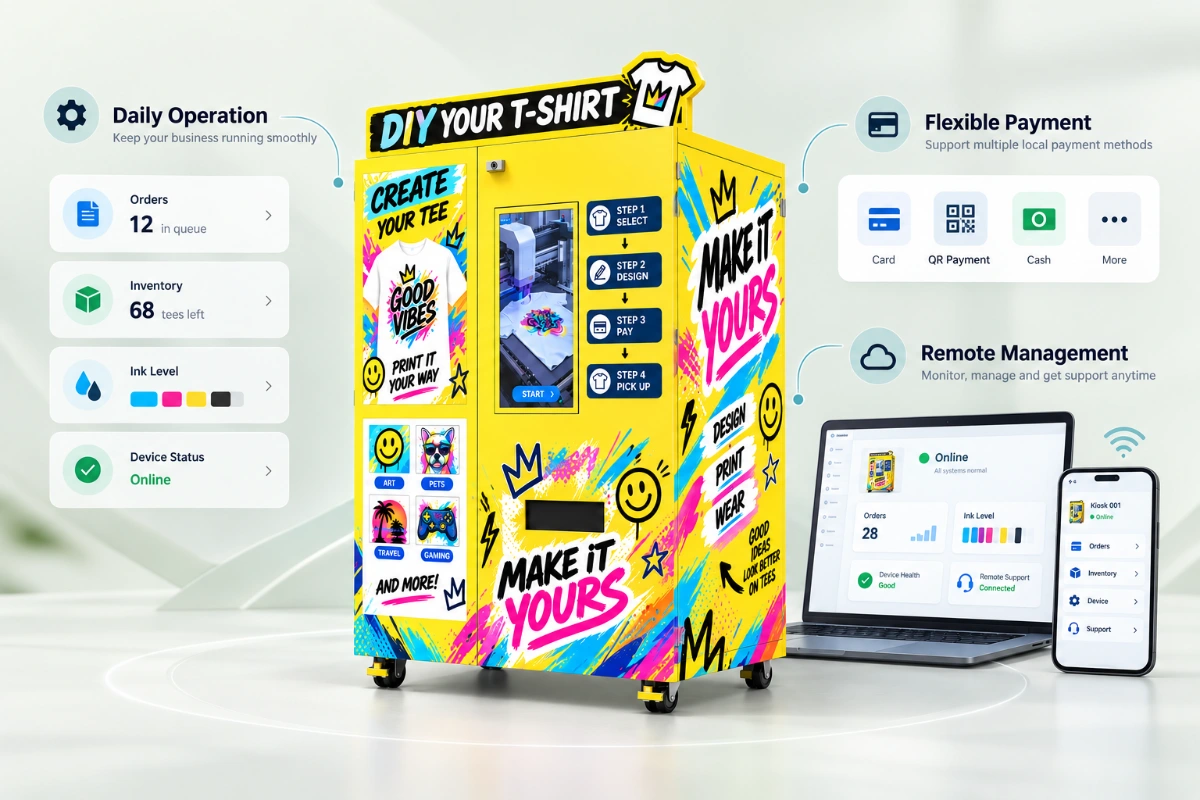
The kiosk is built for unattended retail, while giving operators visibility into inventory, equipment status and daily activity.
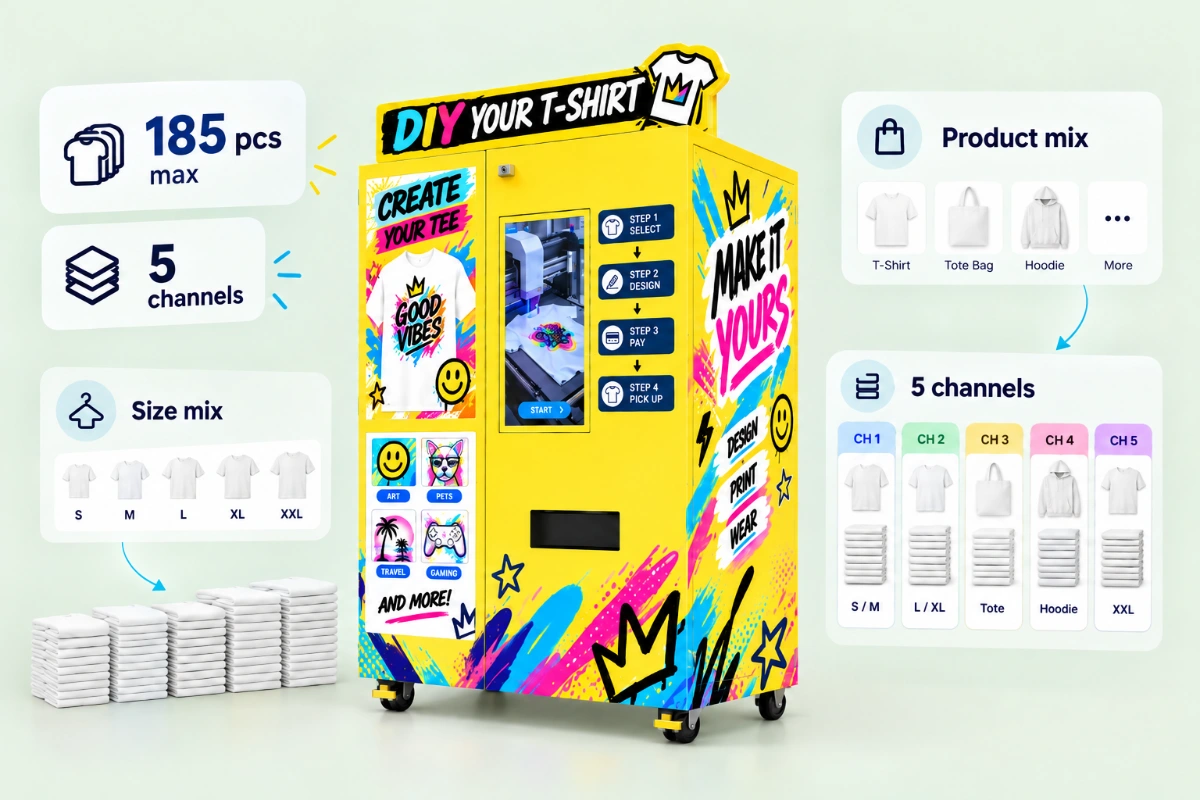
Up to 185 prepared products can be stored inside the machine.
The five independent channels can be assigned to different sizes or compatible products according to demand.
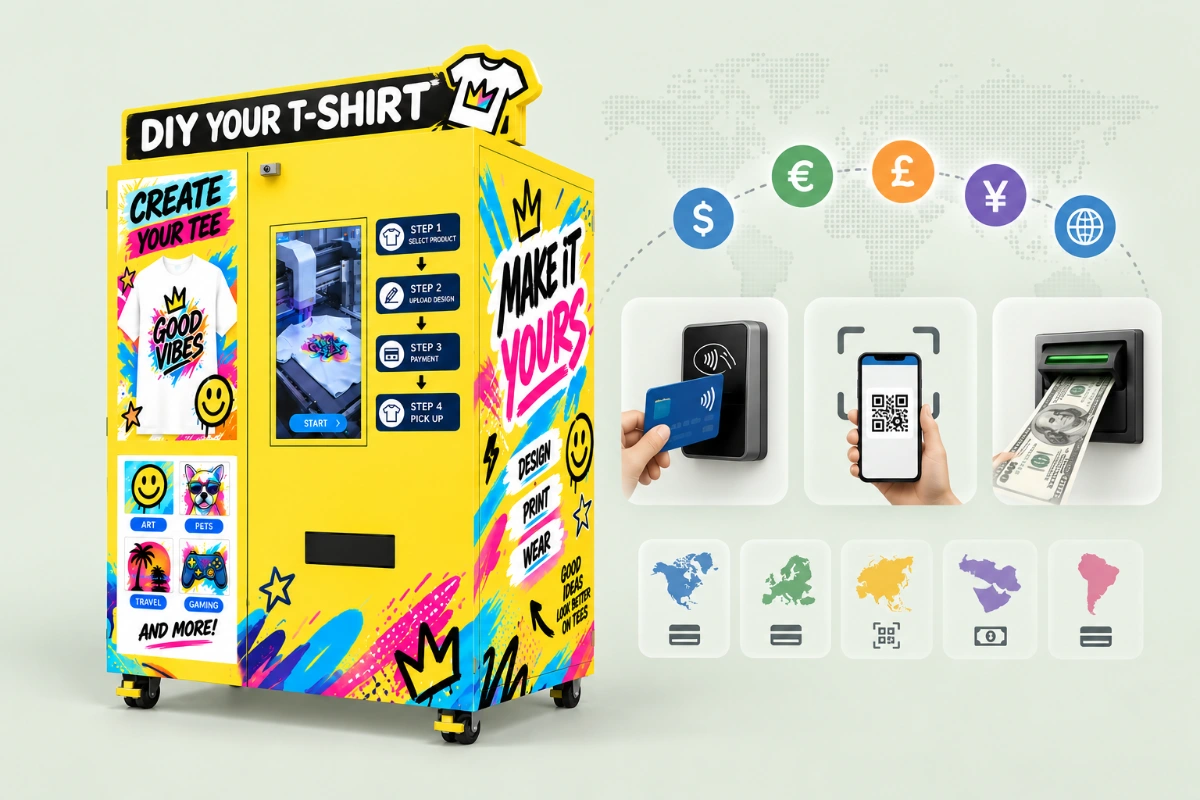
Card readers, bill acceptors and other compatible payment solutions can be selected according to country, currency and local payment requirements.
Local merchant accounts, payment fees and provider approval remain subject to the selected payment service.
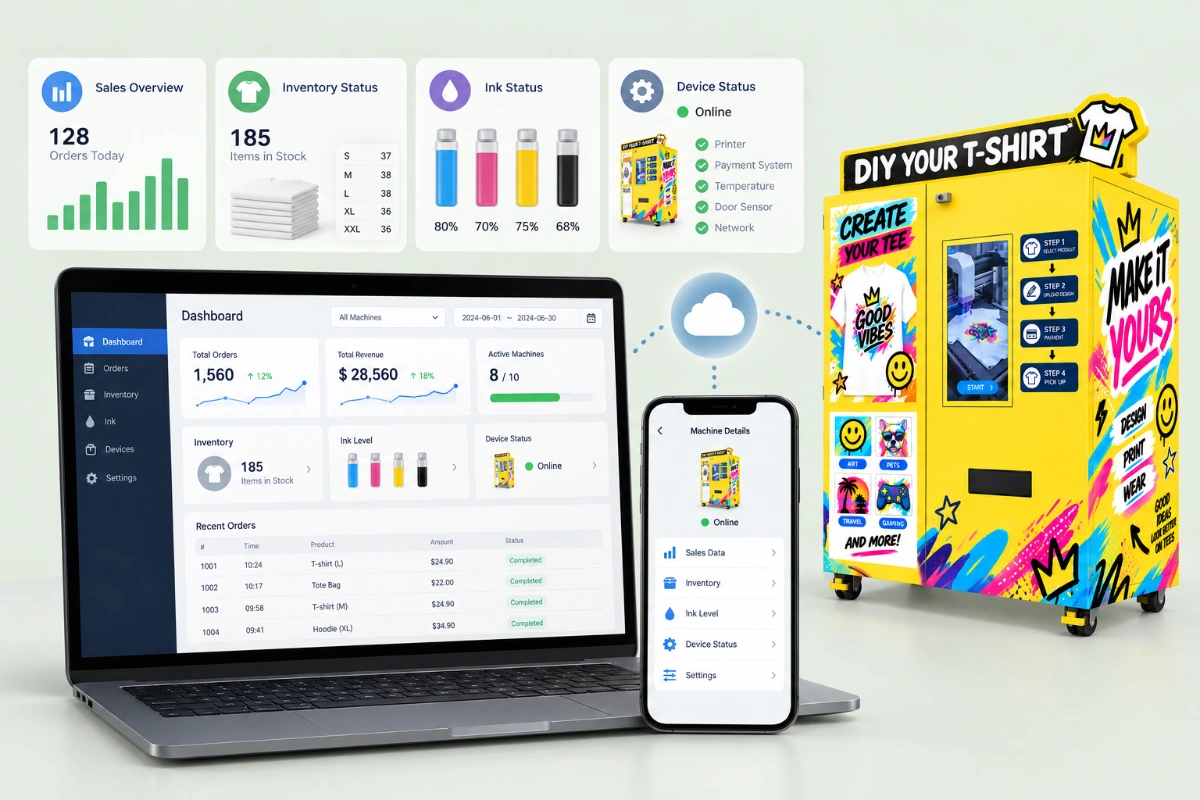
Operators can remotely view sales, inventory, ink status and equipment alerts through the device management system.
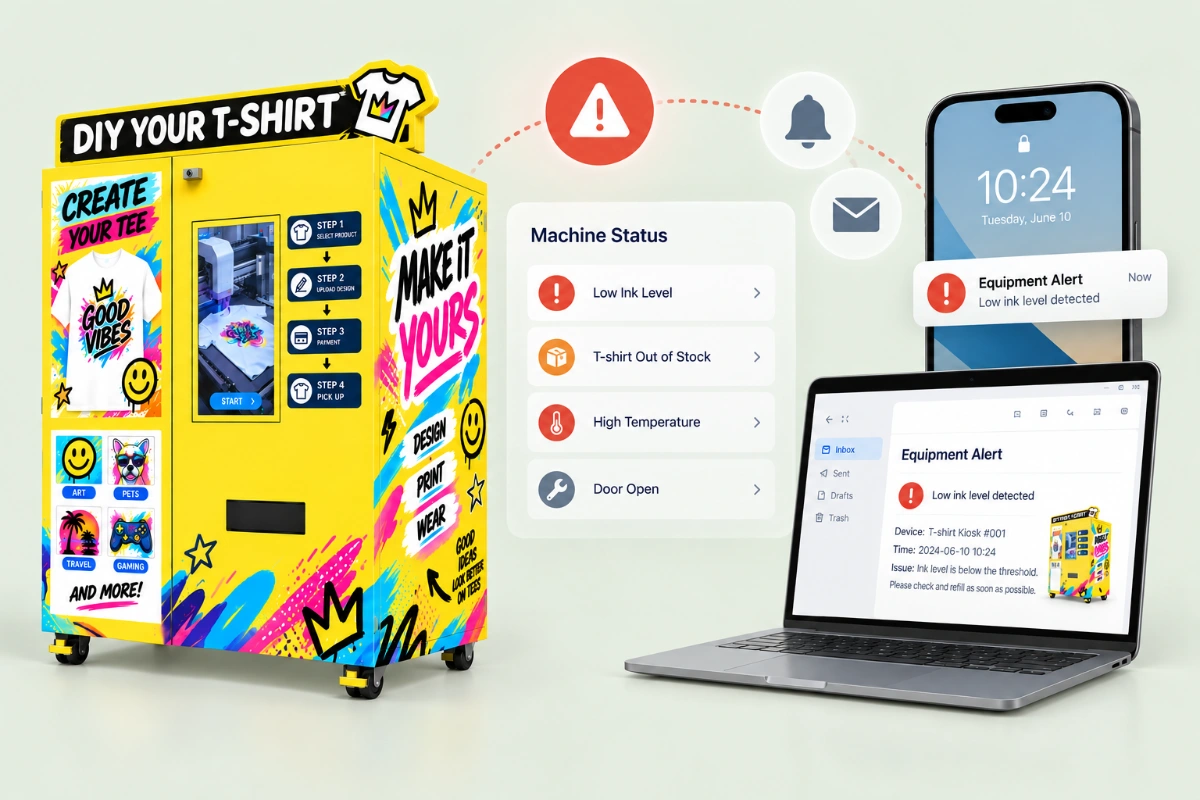
When abnormal conditions are detected, the system can identify the affected module and send alert emails to the registered operator.
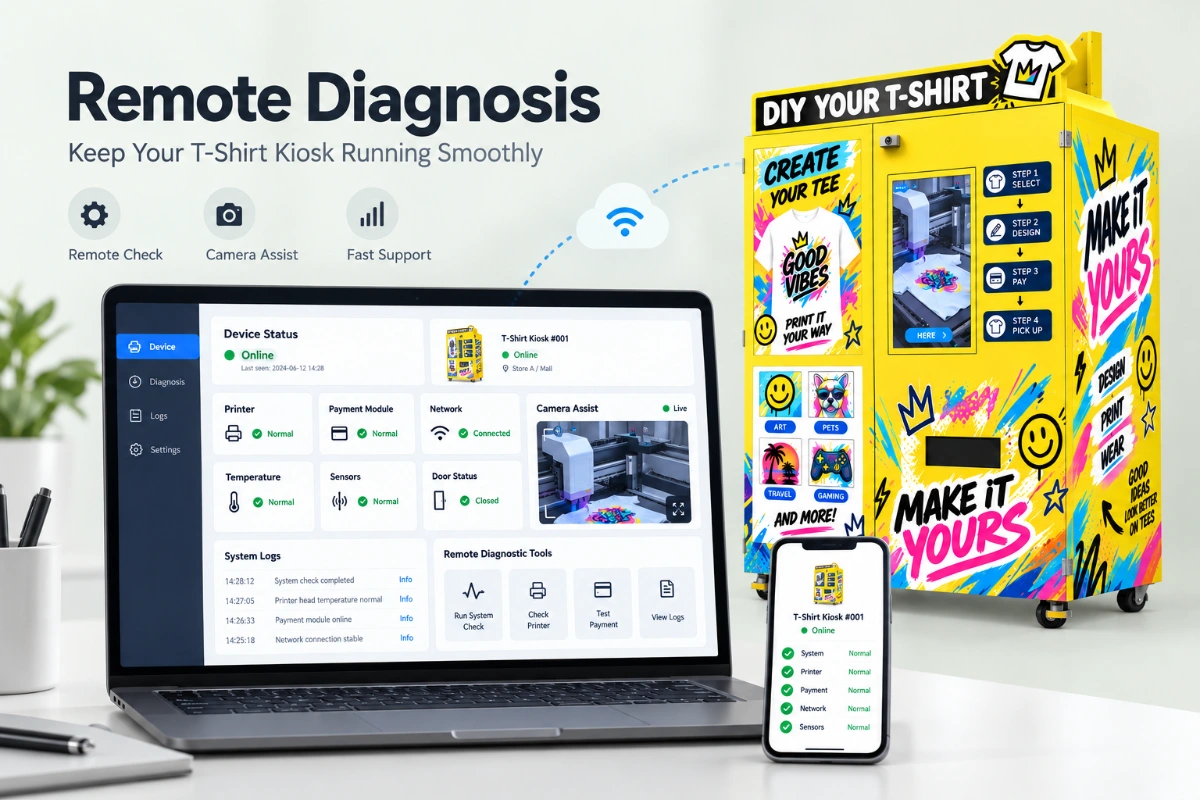
The technical team can review server logs, run remote control tests and, with authorization, access the machine’s internal camera to inspect real-time operation and fault recordings.
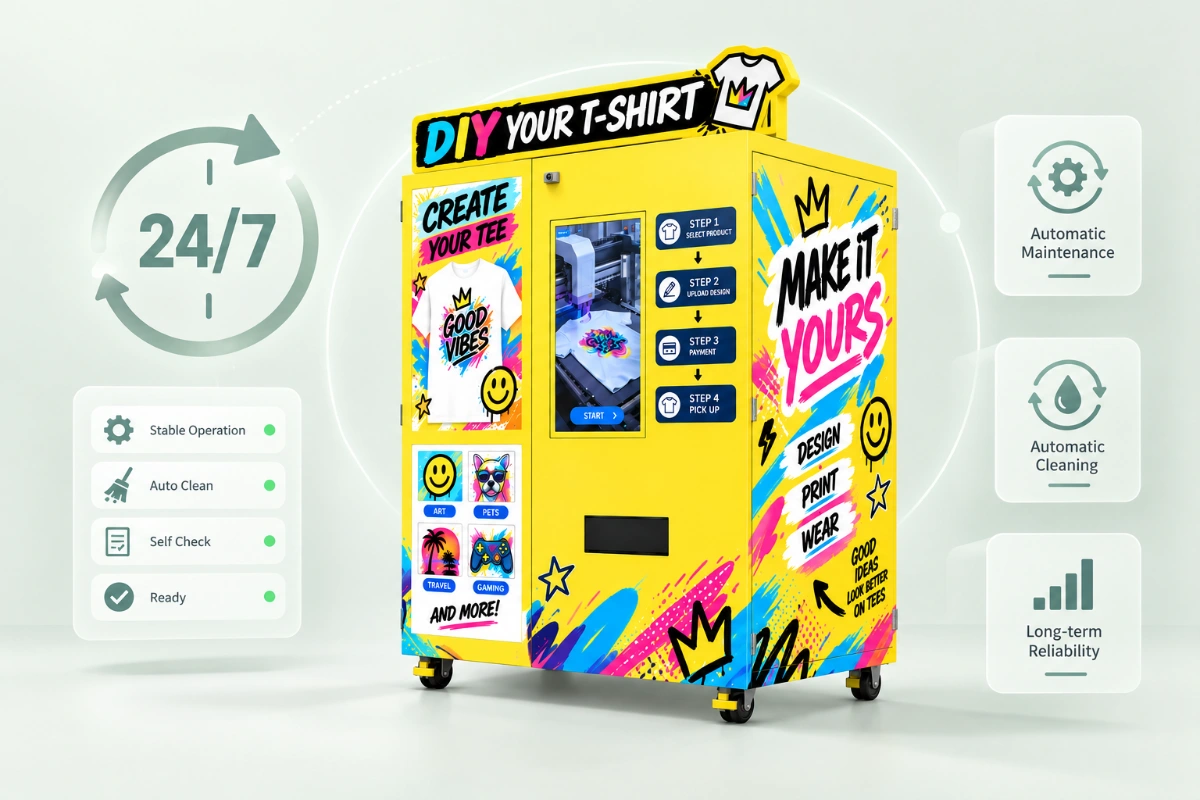
The equipment is designed for long operating periods and includes automatic maintenance functions to help keep the printing system ready.
The main consumables are garments, gift boxes and ink.
You can start with our tested materials, then gradually validate compatible local sourcing if it better suits your market.
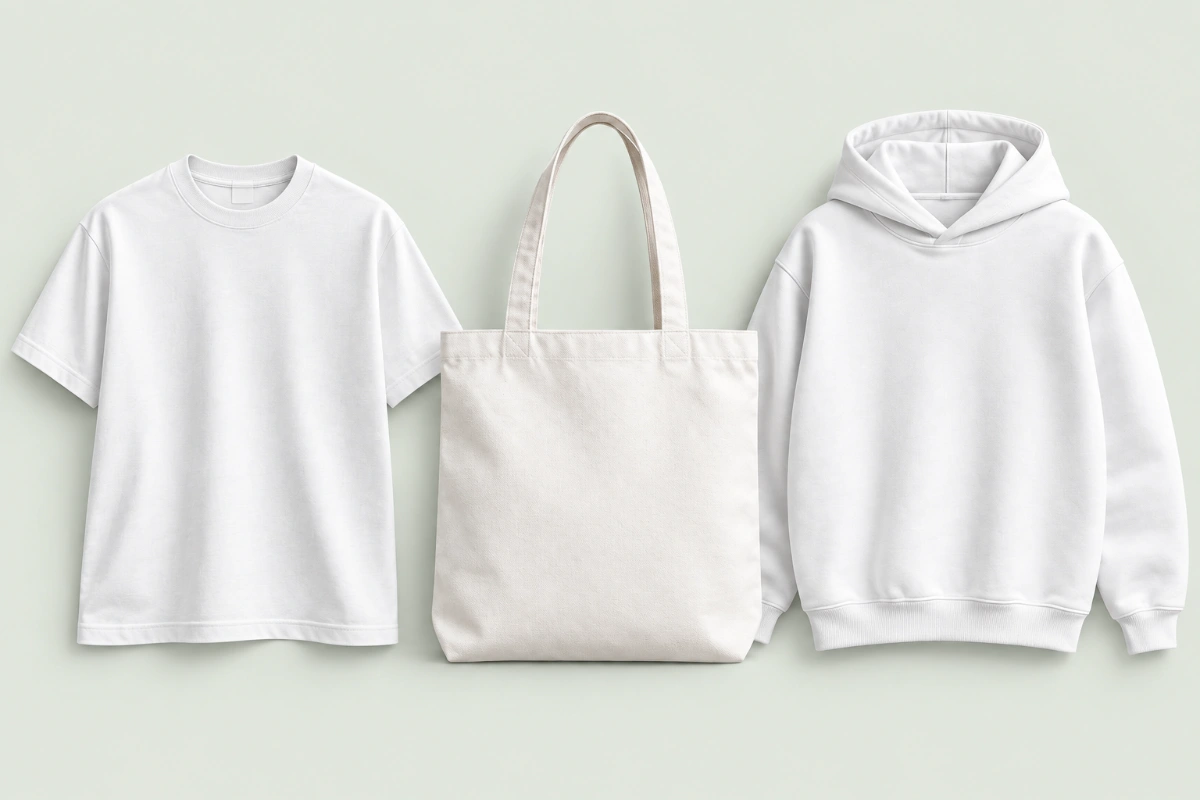
Available options include Sorona blend, 100% cotton and polyester.
For the Sorona option, the recommended blend is:
65% cotton / 35% Sorona
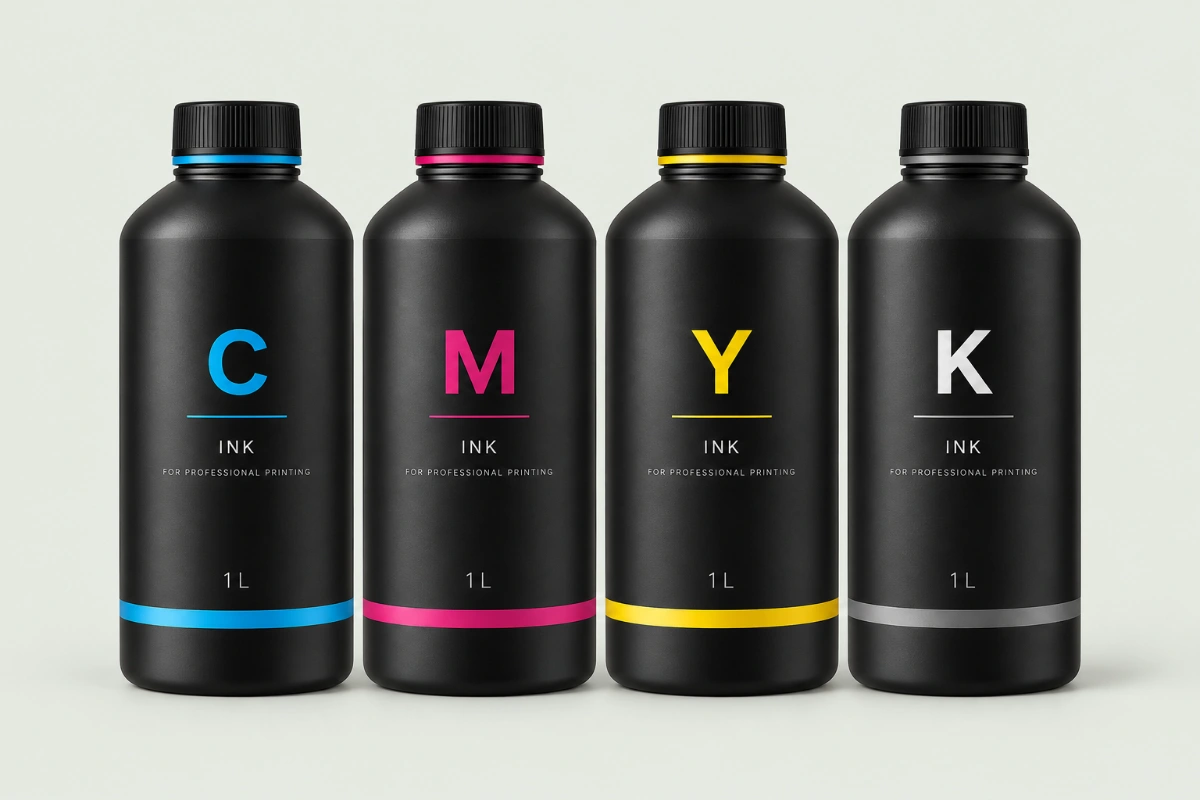
The system uses a four-color CMYK ink set.
4 × 1L per set.
A complete 4 × 1L CMYK ink set produced approximately 900 prints in a controlled test using a fixed print size and ink coverage. Actual consumption varies with artwork, maintenance and operating conditions.
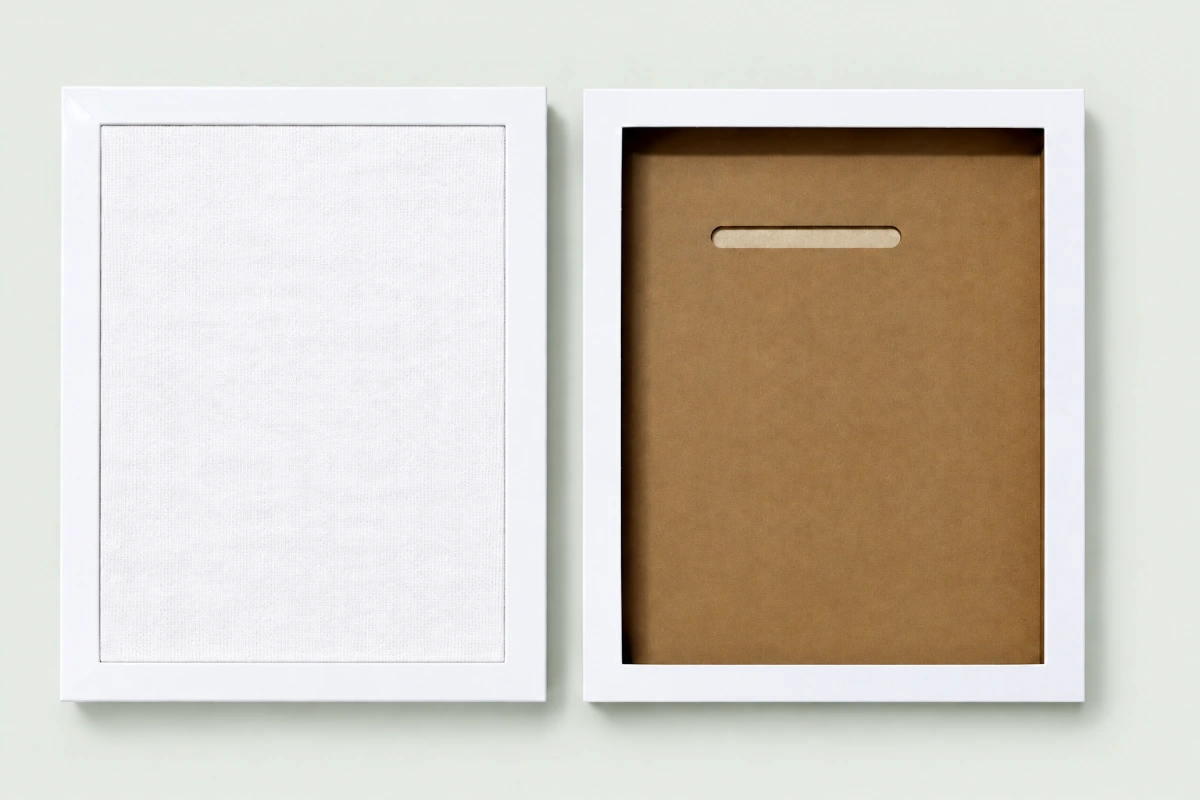
The garment is folded and positioned inside the matching printing box before loading into the machine.
The box helps maintain consistent placement during printing and becomes the customer’s take-away packaging.
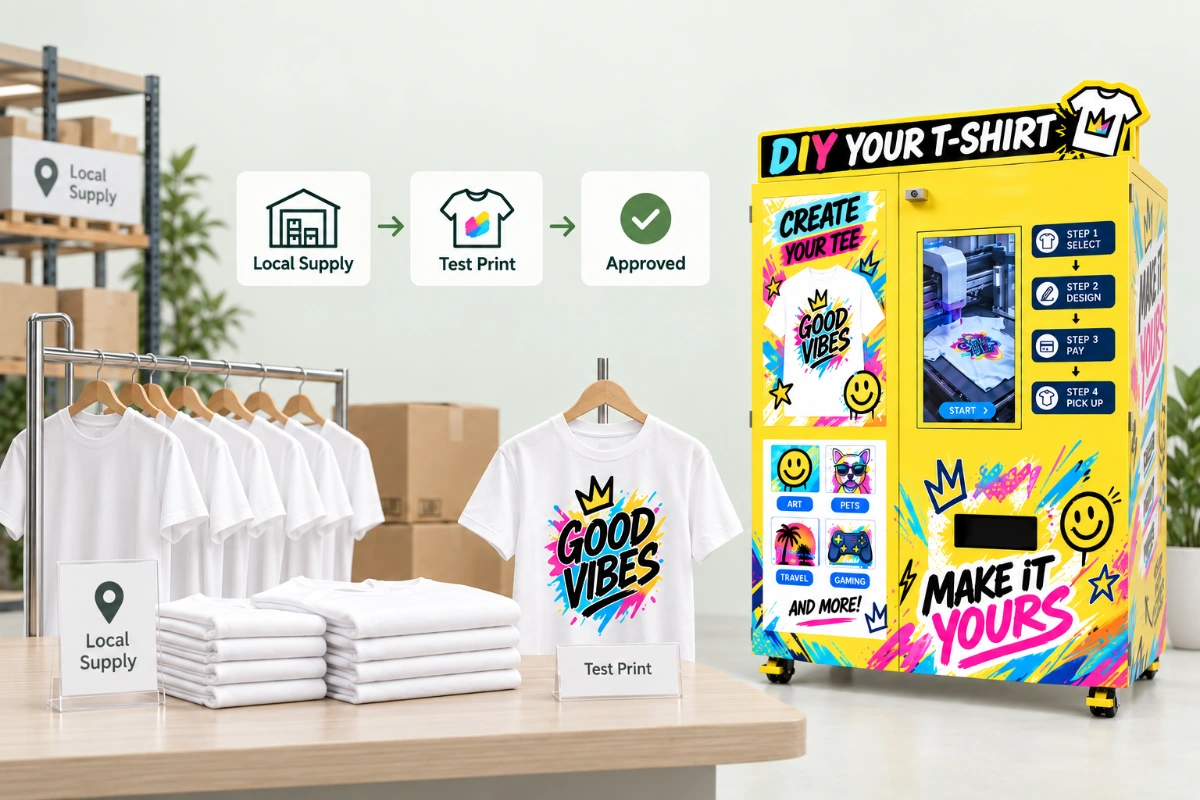
For a new installation, we recommend using tested garments first to establish a stable print baseline.
After installation, operators can test locally sourced garments directly. If the print quality and physical compatibility are satisfactory, local sourcing can reduce logistics cost and lead time.
The kiosk works best where customers already spend time, shop, travel, celebrate or look for memorable products.
Add personalized products without building a staffed customization store.
Turn photos, destination artwork and memories into take-home products.
Suitable for campus merchandise, events and student personalization.
Create instant souvenirs linked to the customer experience.
Support fan merchandise, campaigns and limited-edition designs.
Add a compact personalization experience to high-traffic environments.
Customers have deployed the T-shirt printing kiosk across North America, Europe, Asia and Australia.
Specific venue names are withheld where requested to protect customer commercial privacy.
35 average daily orders
26 average daily orders
Purchased 6 additional units
24 average daily orders
23 average daily orders
20 average daily orders
Purchased 1 additional unit
18 average daily orders
Exploring local distribution cooperation
15 average daily orders
Purchased 8 additional units
15 average daily orders
13 average daily orders
8 average daily orders
Customer results vary by location, pricing, traffic, seasonality and operating conditions. The figures above are customer-reported operating data and should not be interpreted as guaranteed performance.
T-shirt printing kiosks have been sold to: United States · Canada · Japan · Singapore · Kazakhstan · Australia · Malaysia · Italy · Spain · China · Hong Kong
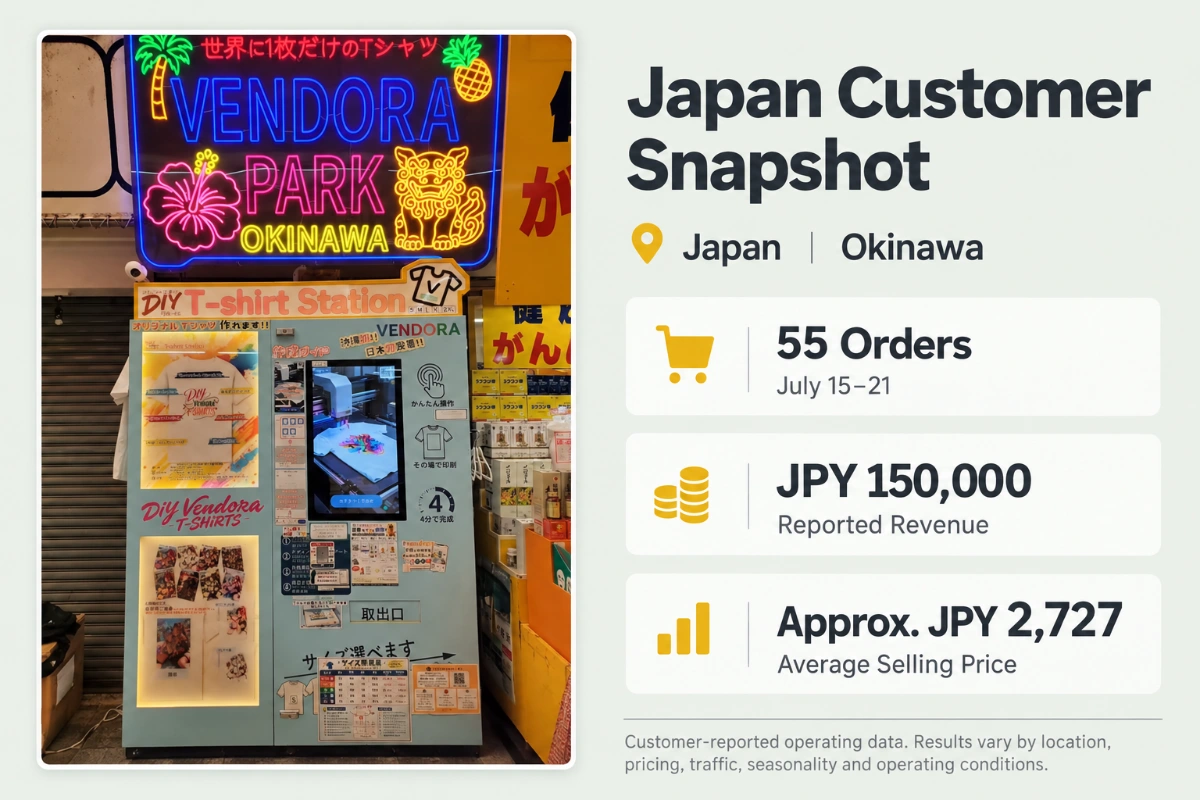
A customer in Okinawa began with one T-shirt printing kiosk. After validating the concept in operation, the customer expanded with three additional units, followed by another order for five more machines. The customer has now expanded from 1 to 9 units in total. Reported average daily order volume is approximately 15 orders.
Reference specifications for the current production version. Final electrical configuration, installation drawing and optional components should be confirmed with the quotation.
From exterior branding to product mix and software experience, the machine can be configured to better match your venue, audience and operating model.
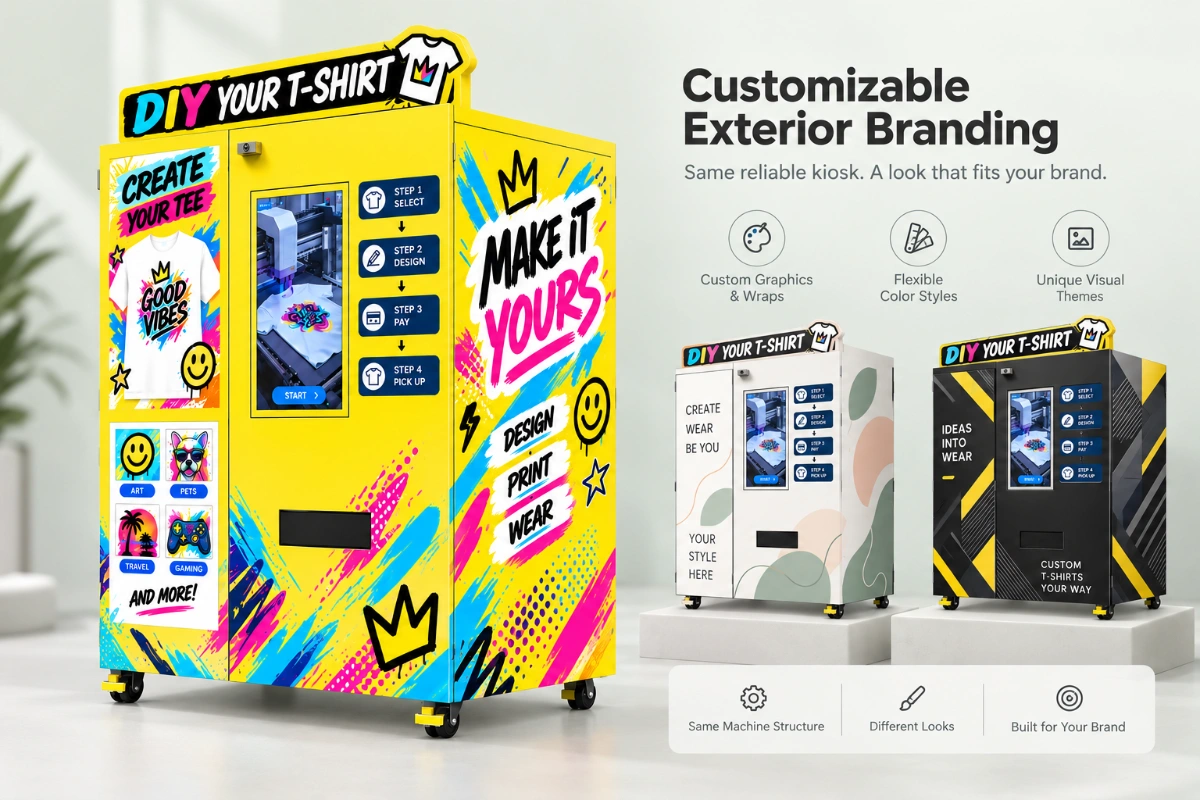
Customize the machine wrap, graphics, logo and top lightbox.
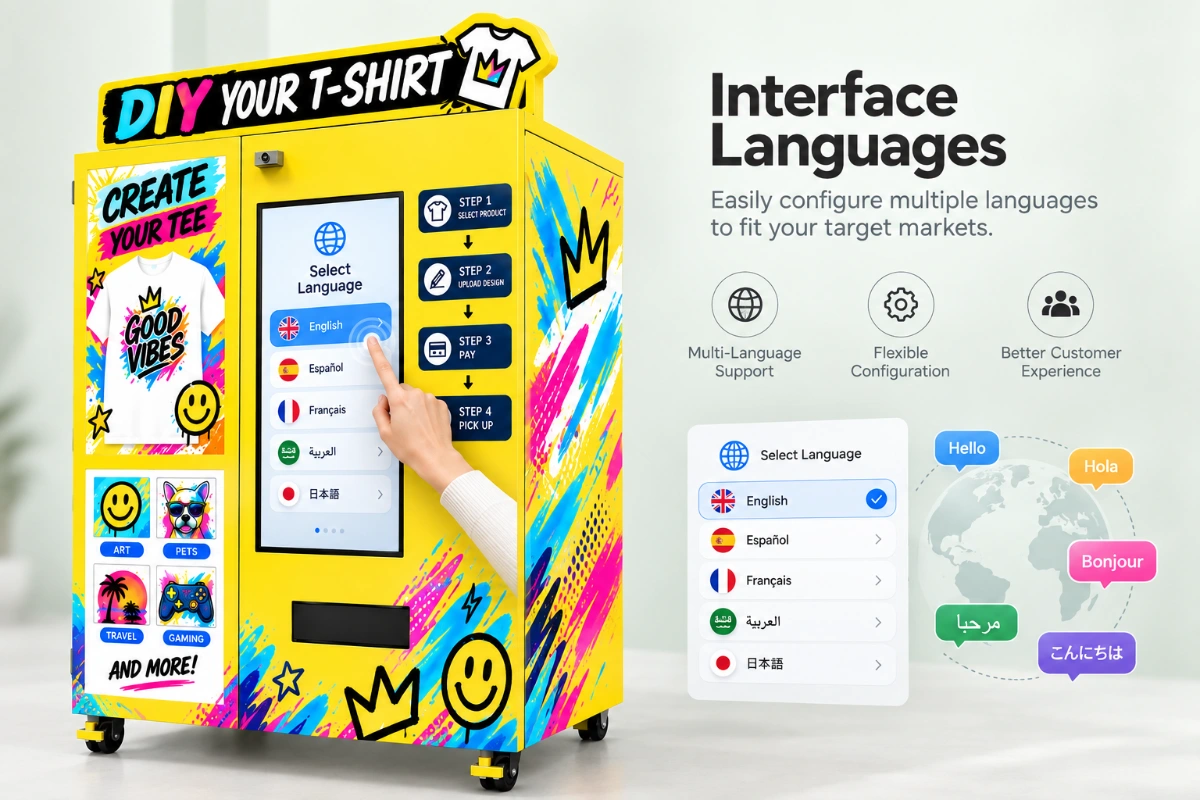
Select suitable customer-interface languages for your market.
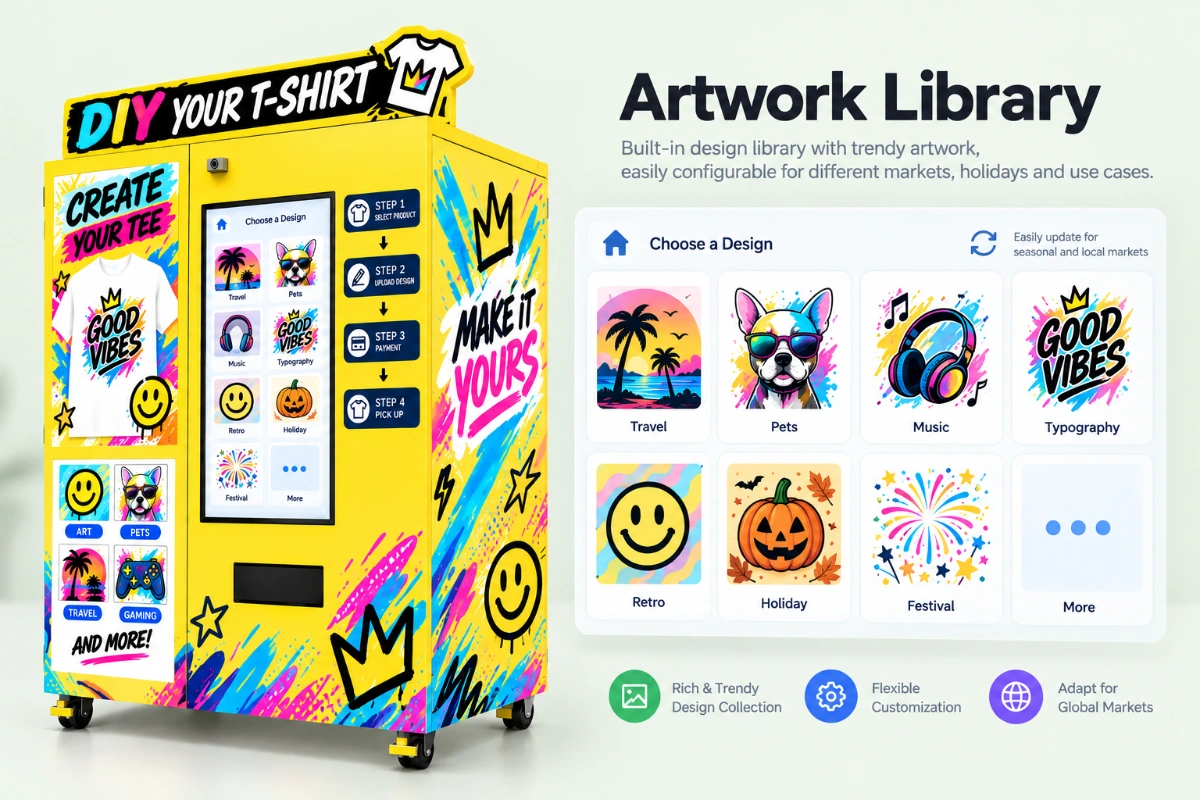
Add your own authorized designs, campaign graphics or venue-specific artwork.
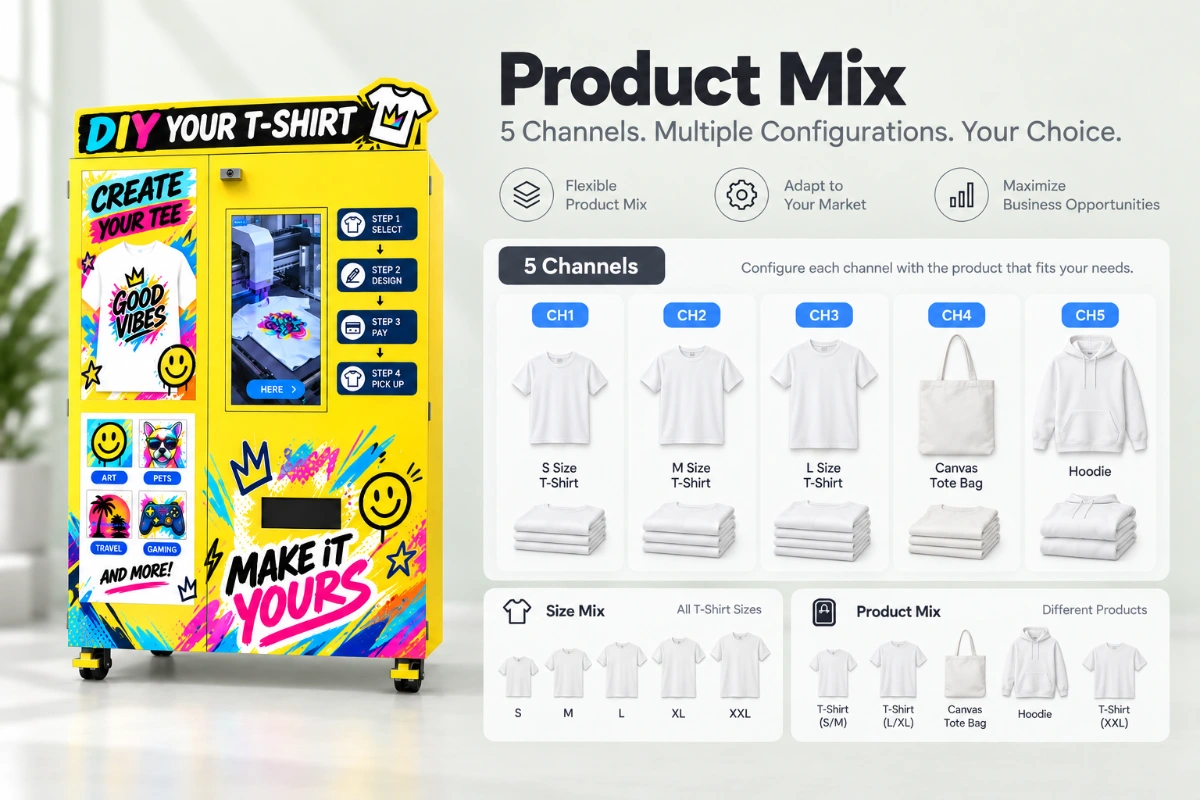
Use the five independent channels for different T-shirt sizes or compatible product combinations.
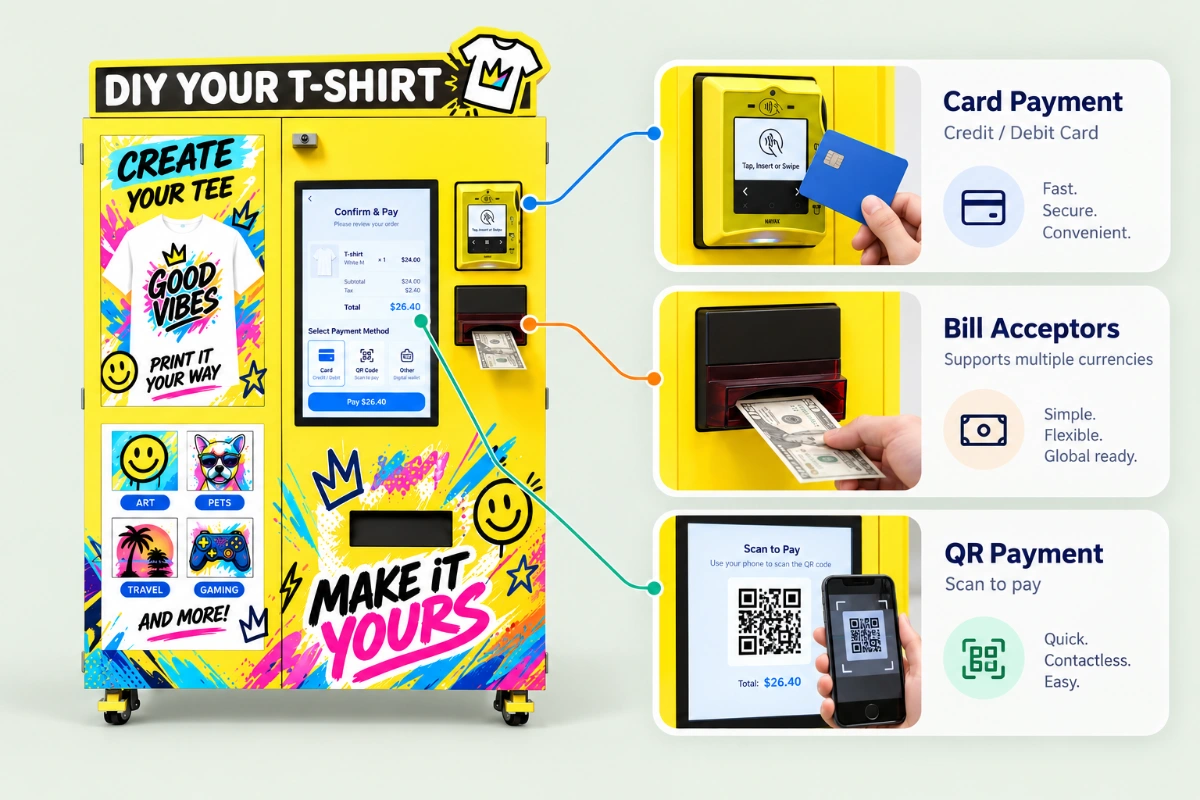
Configure supported card readers, bill acceptors or compatible local payment hardware.
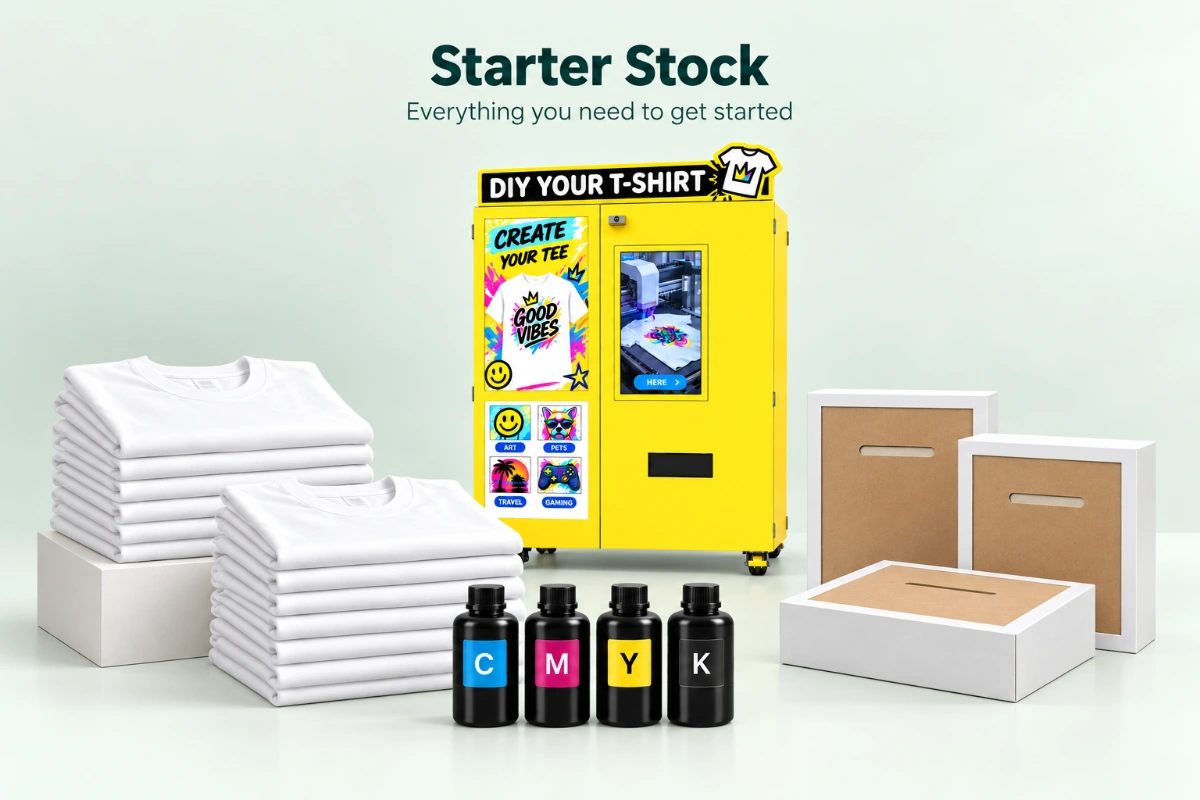
Plan the initial garment sizes, fabrics, gift boxes and ink together with the machine.
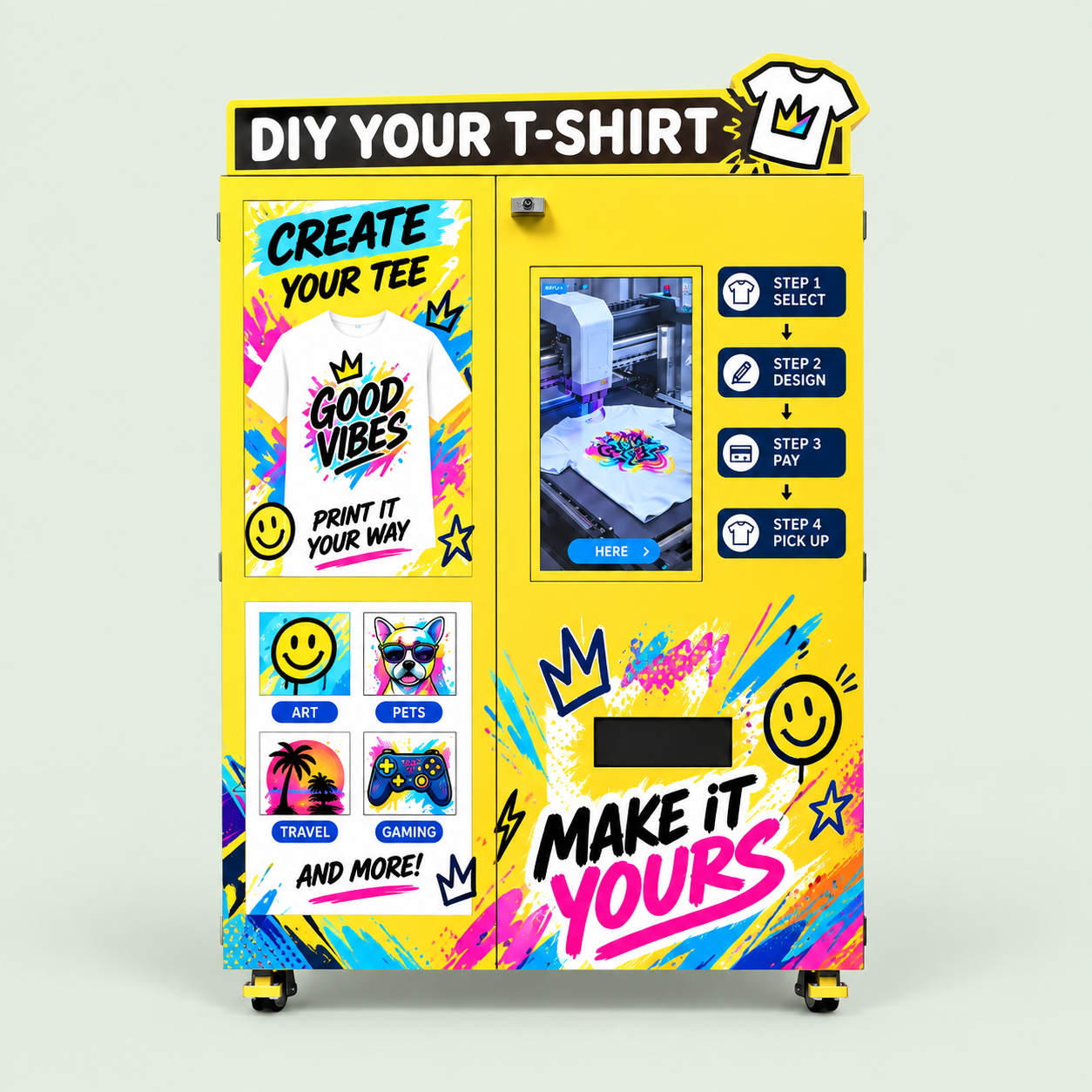
Standard exterior — front view
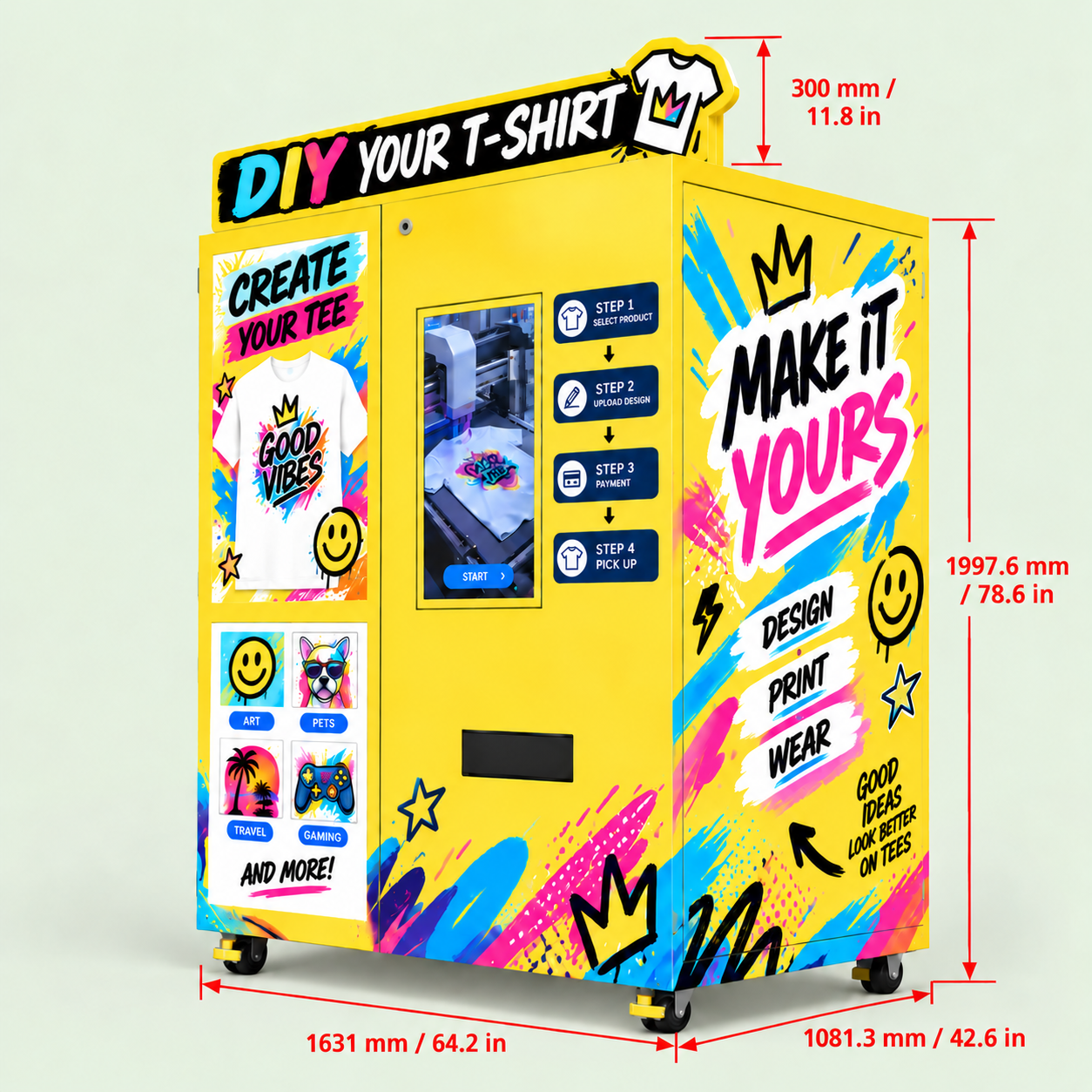
Standard exterior — angled view
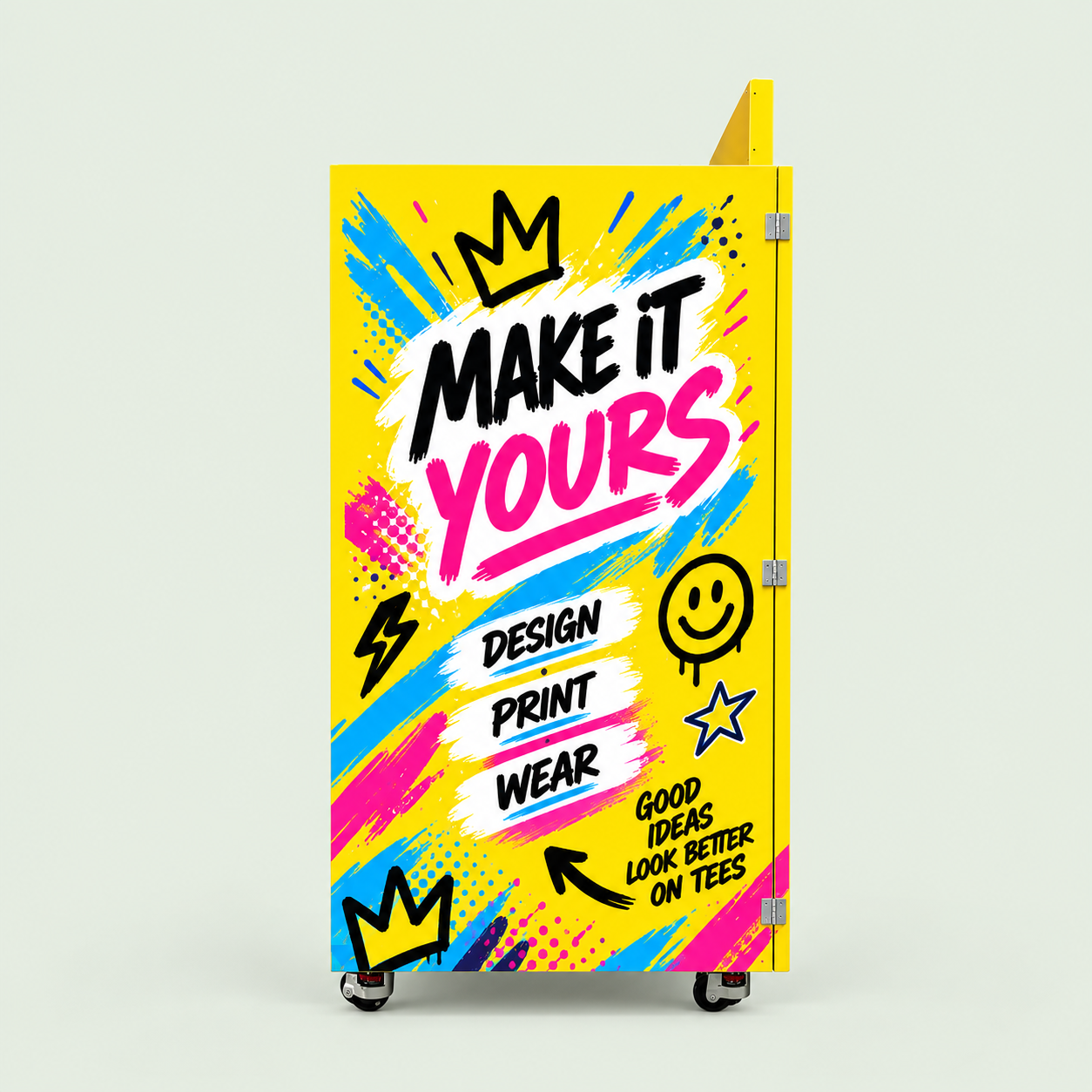
Standard exterior — side view
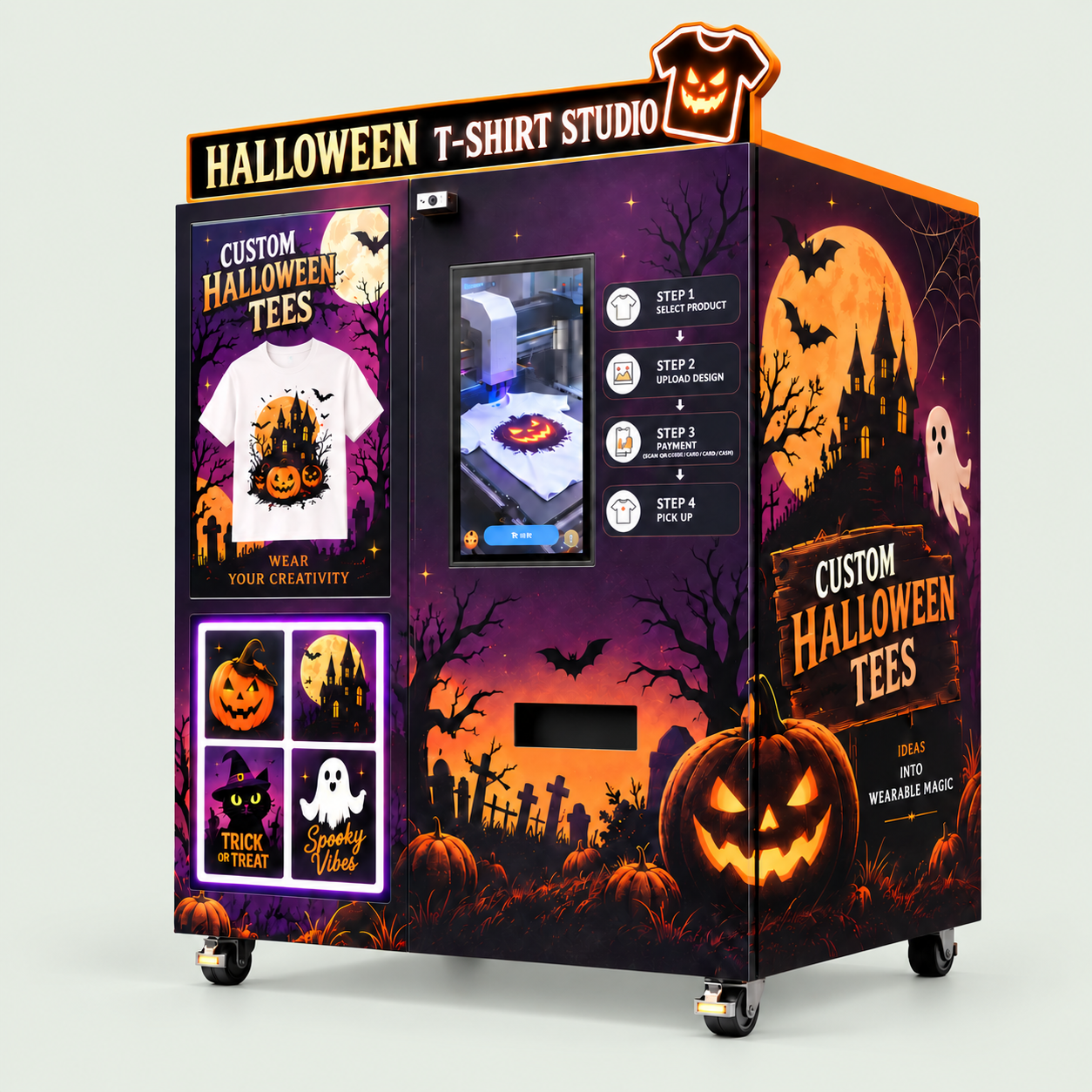
Example of a customized exterior theme
Share your country, installation environment, quantity and target launch date.
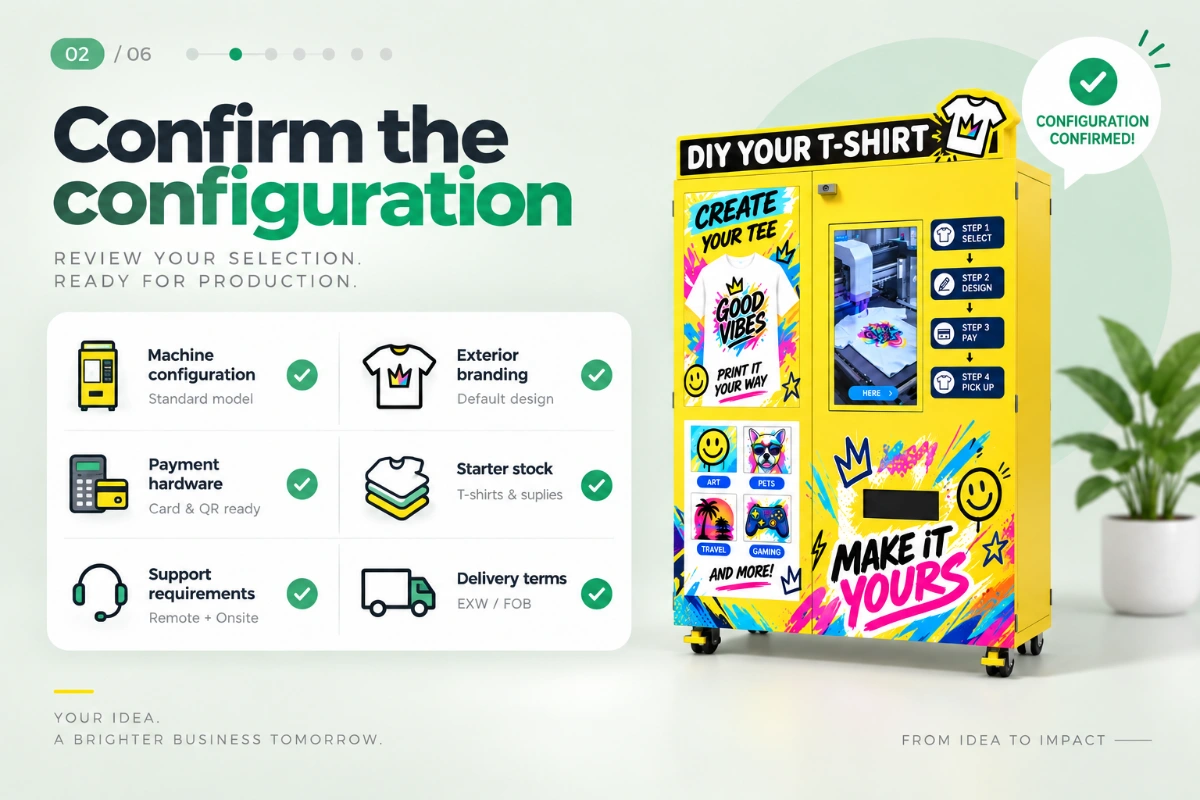
We confirm machine configuration, branding, payment hardware, starter stock, support requirements and delivery terms.
The standard payment arrangement is:
50% deposit before production 50% balance before shipment
Standard machine production typically takes approximately 15–20 days, subject to the confirmed order.
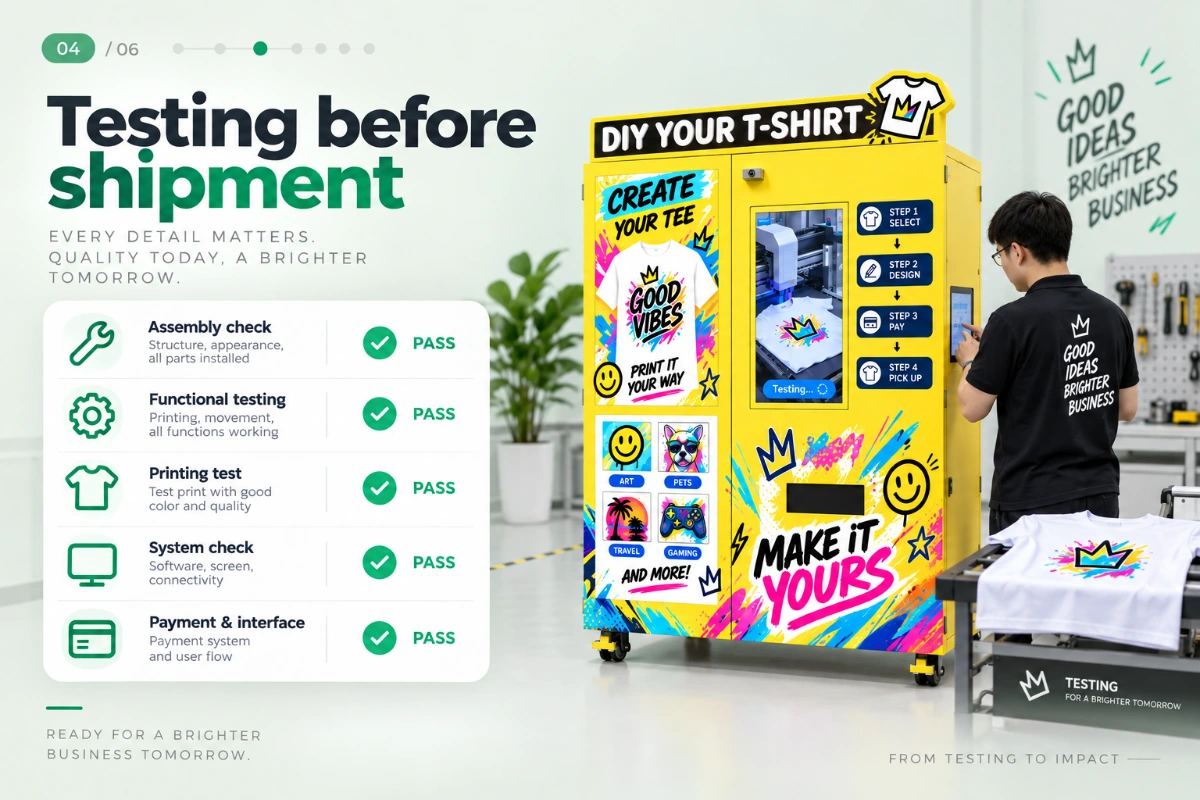
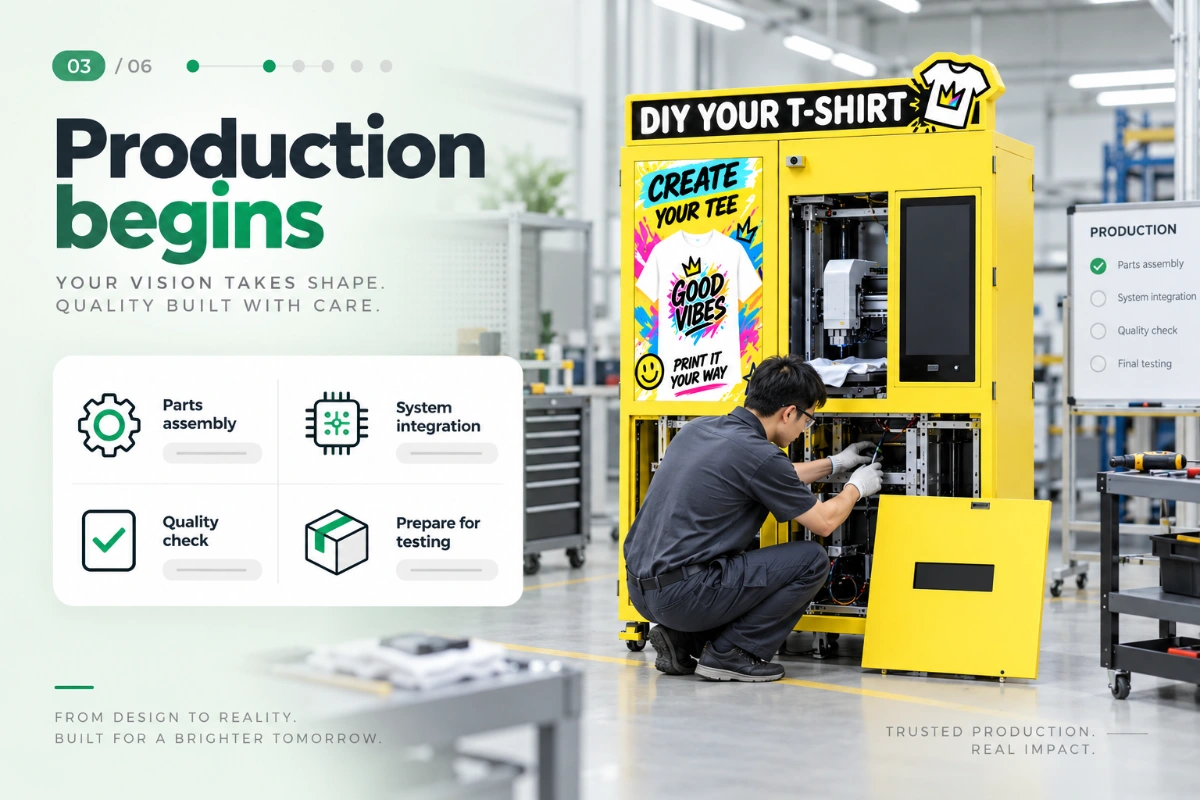
The machine is assembled, tested and prepared according to the confirmed configuration.
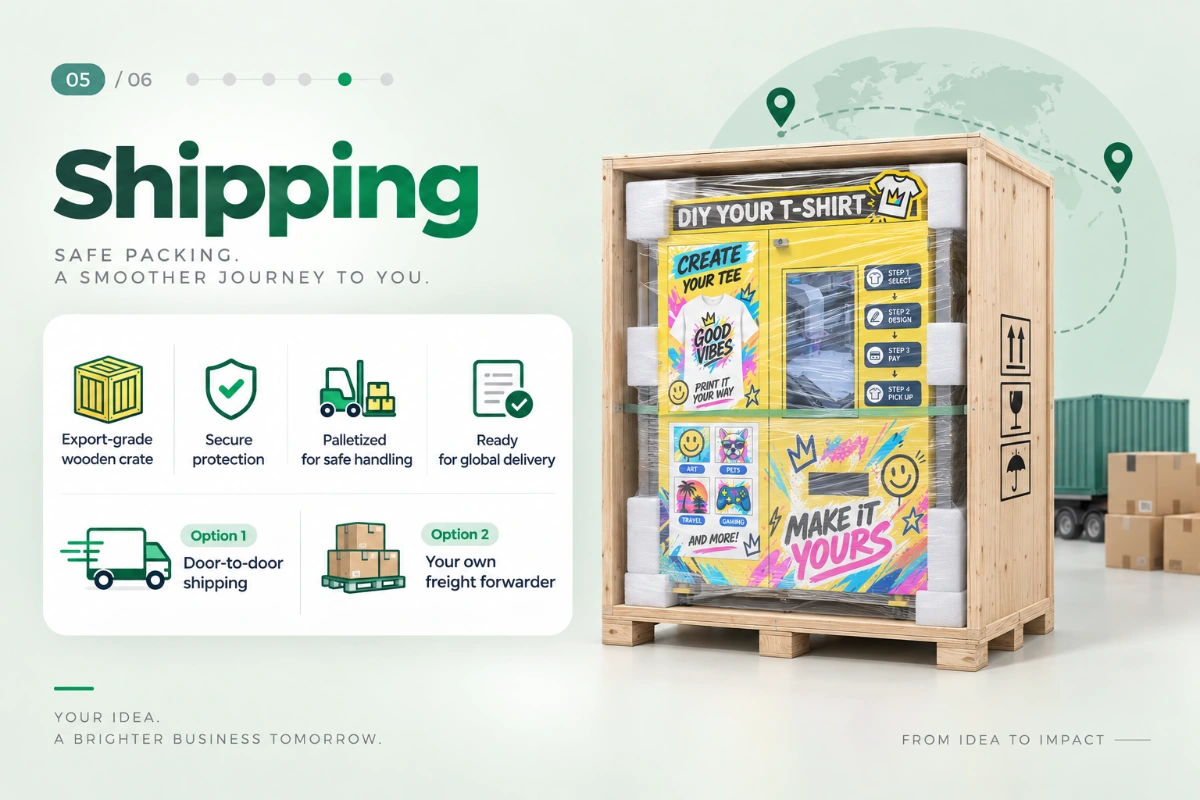
Door-to-door shipping can be quoted after receiving the full delivery address.
Customers may also use their own freight forwarder.
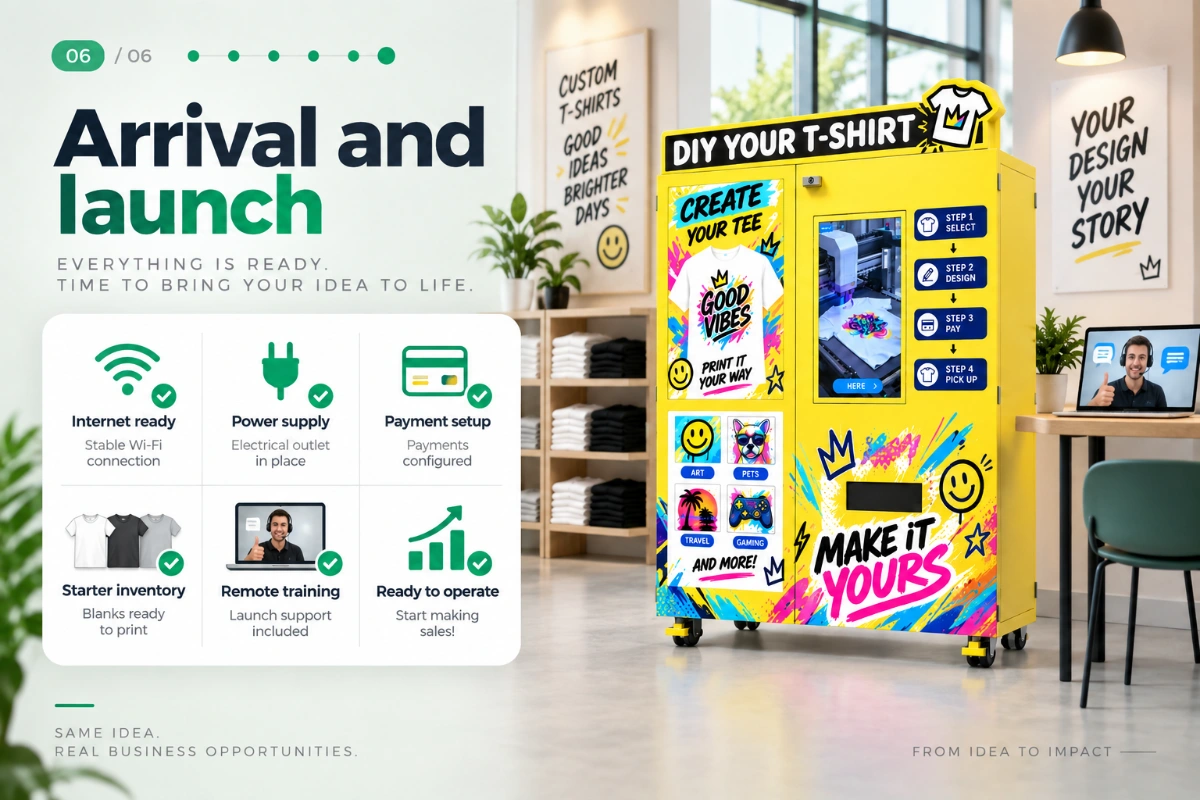
Prepare the installation space, internet connection, electrical supply, payment account and starter inventory.
Remote training and launch support are provided before operation.
1684 × 1220 × 2170 mm
Approx. 349.6 kg
Approximately 120–150 prepared garment-and-box sets can be placed inside the machine cabinet for transport.
This transport quantity is different from the machine’s maximum operating inventory of up to 185 items.
Depends on the quantity of garments, accessories and consumables packed with the machine.
The goal is not only to ship the machine, but to help operators keep it running reliably after installation.
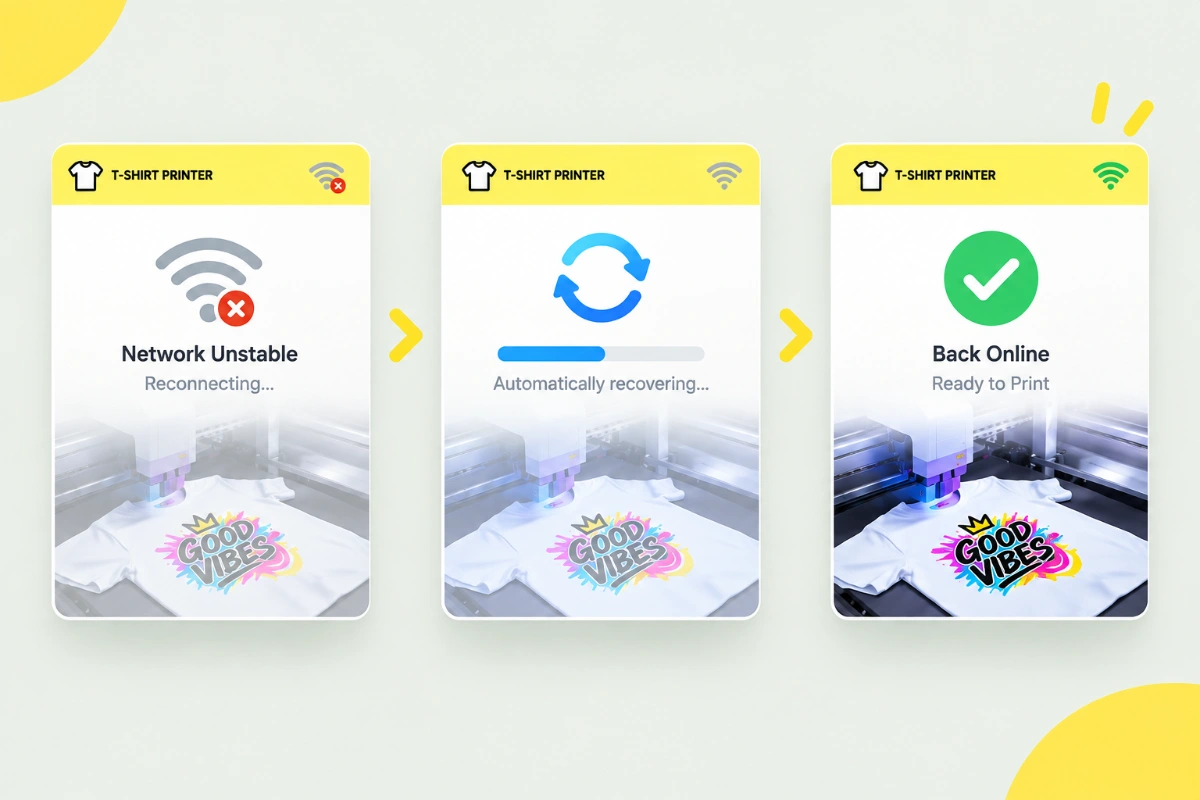
For certain interruptions such as temporary network instability, the system can automatically retry, refresh or reset relevant functions and resume operation after normal conditions return.
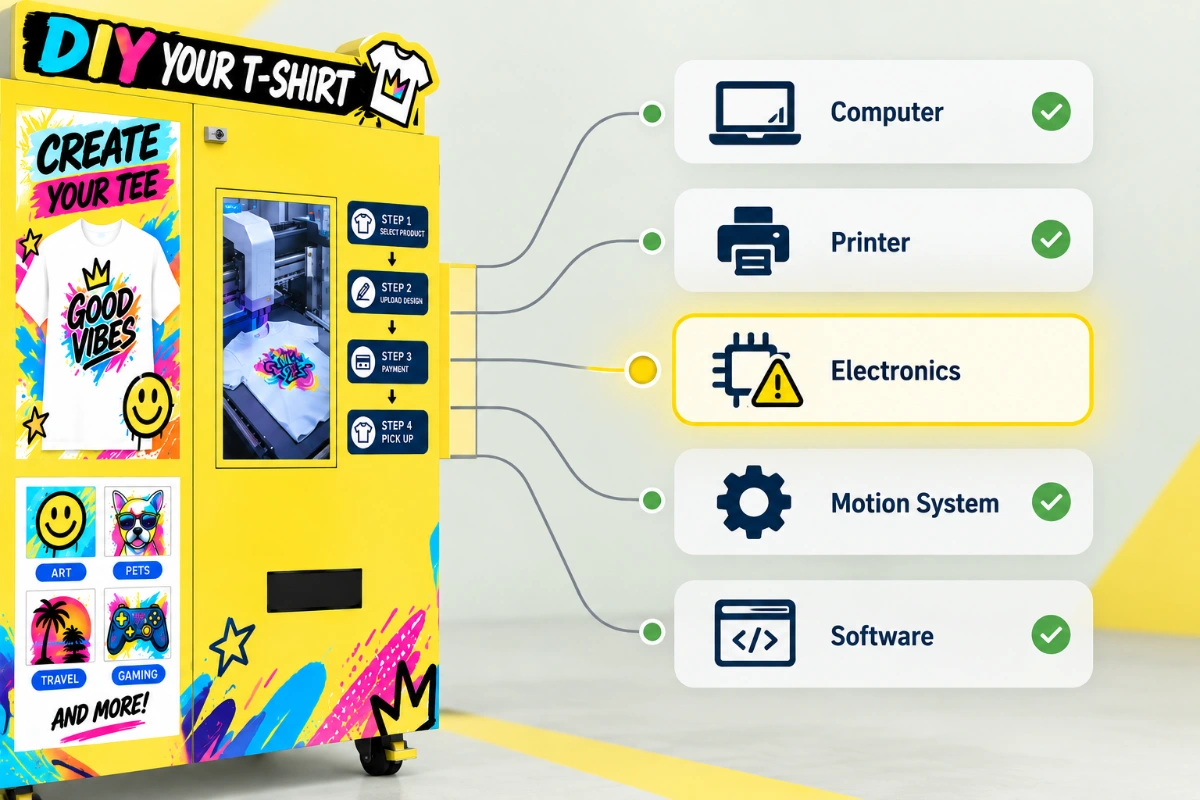
The computer, printer, electronic system, motion modules and software are managed as separate monitored modules.
This helps identify the approximate source of a fault instead of relying only on manual troubleshooting.
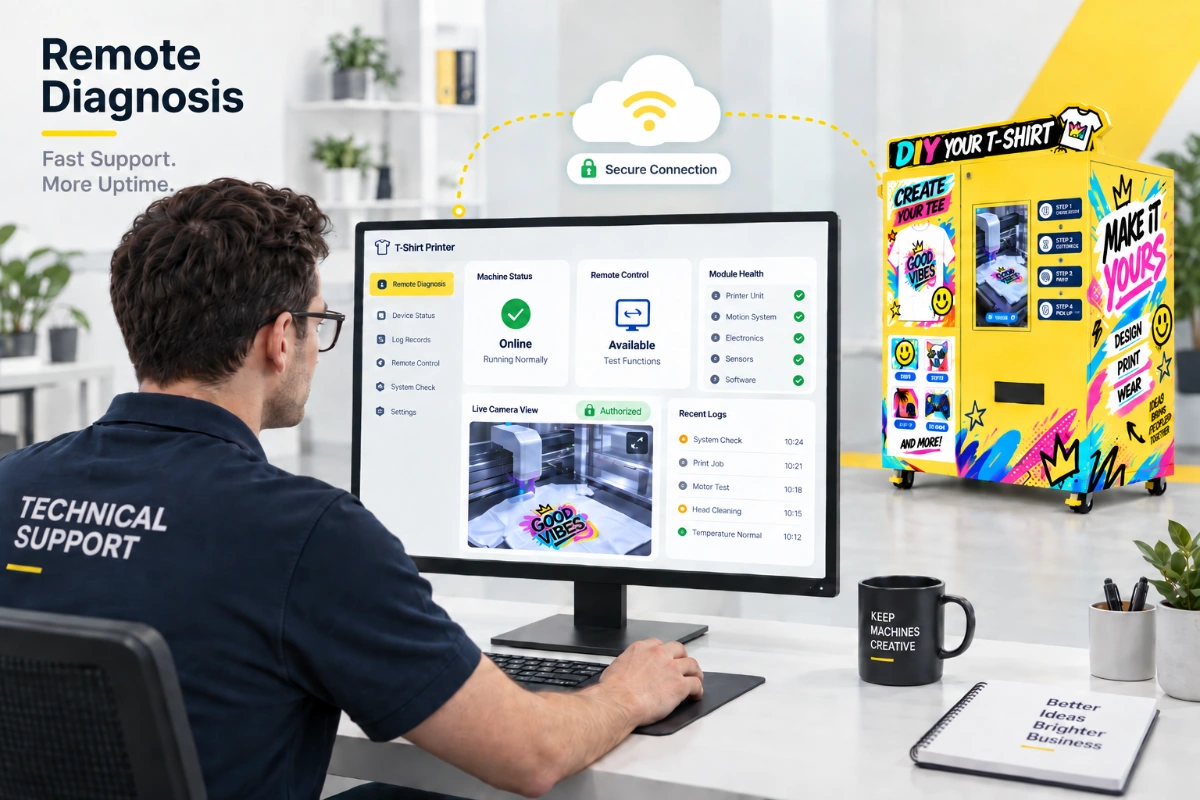
Our technical team can review equipment logs, run remote control tests, check real-time operating status and, with authorization, review fault recordings through the internal camera.
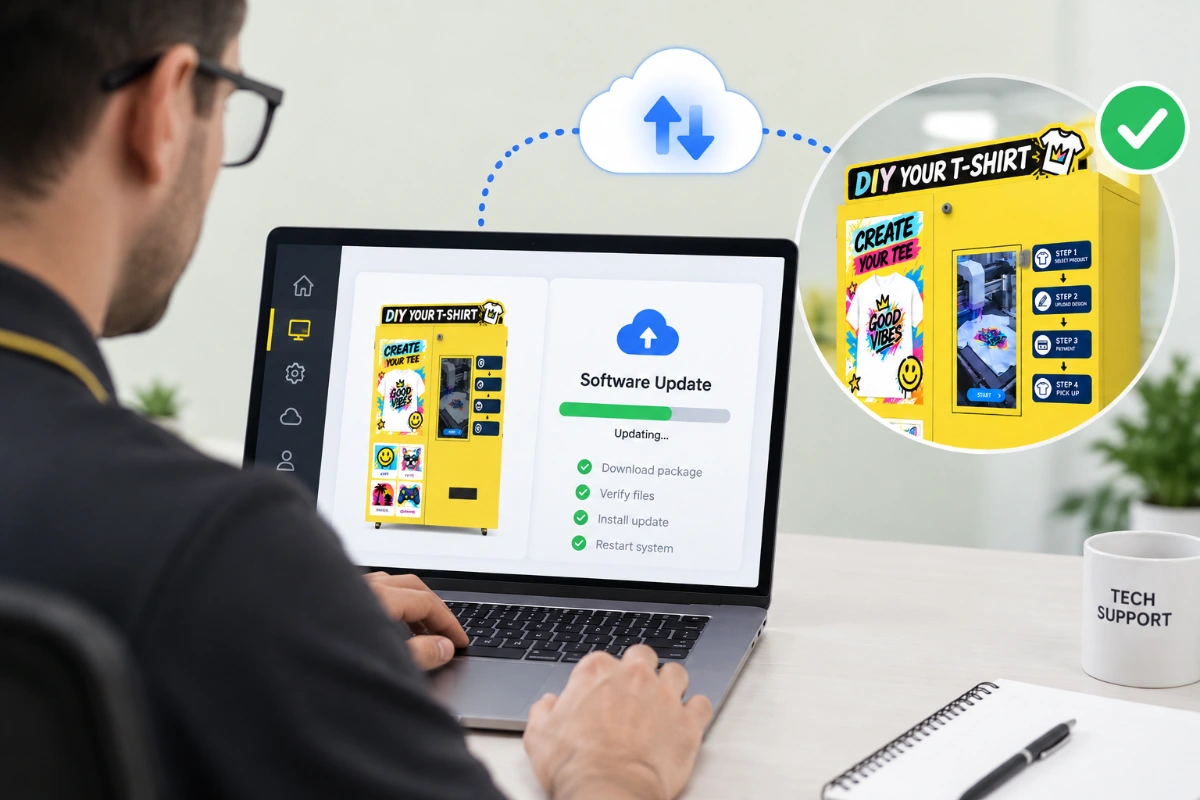
Confirmed software bugs can be fixed remotely and the machine software can be upgraded online.
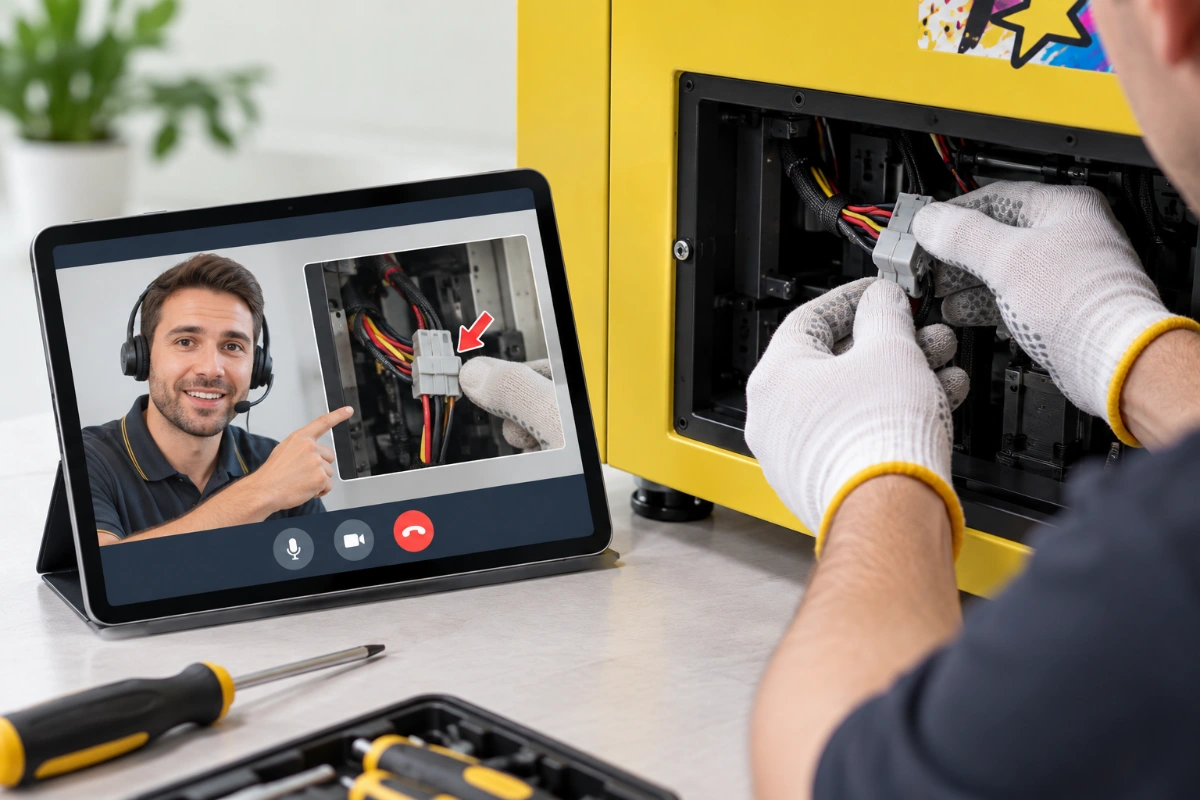
For problems such as loose wiring, connections or mechanical fastening, our technical team can provide remote demonstrations and step-by-step video guidance.
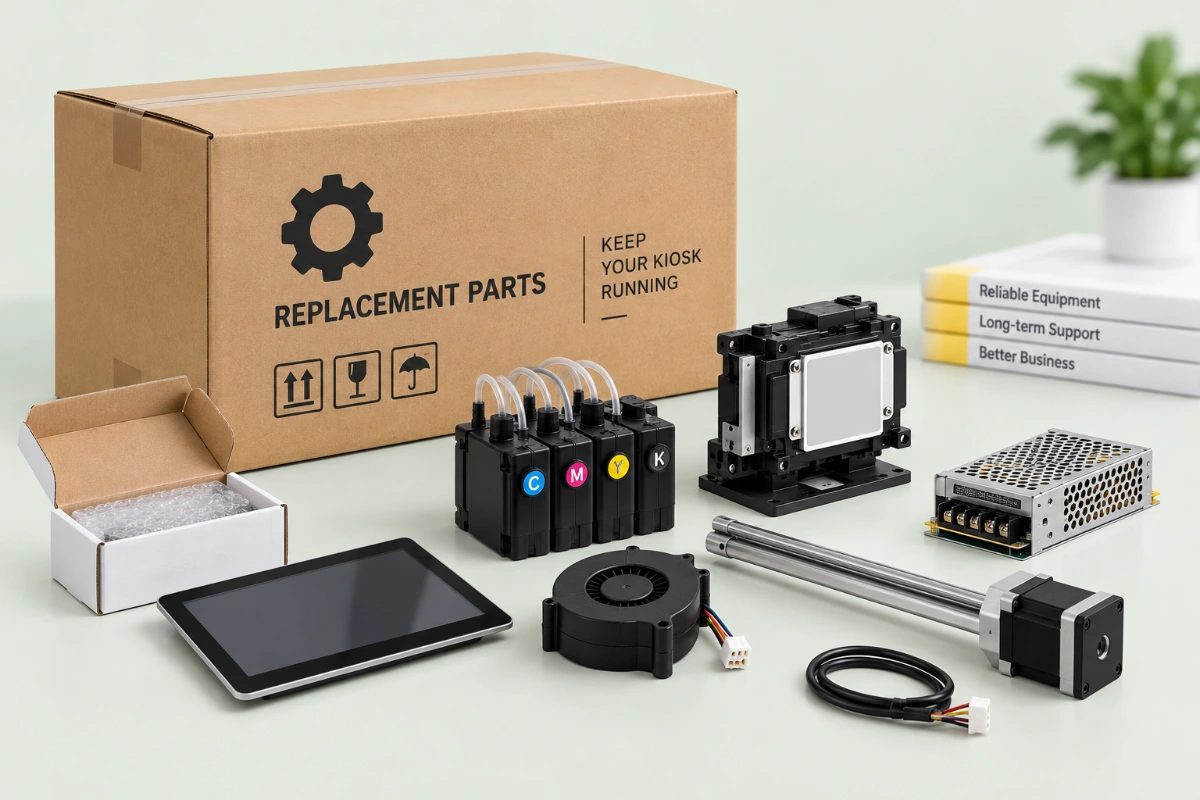
Covered non-wear parts are replaced free of charge during the one-year warranty period.
International shipping costs for replacement parts are borne by the customer.
On-site technical support can be arranged for suitable larger projects subject to the agreed project scope and travel arrangements.
Reliable self-service equipment depends on software, electronics, printing, mechanical design and manufacturing working together.
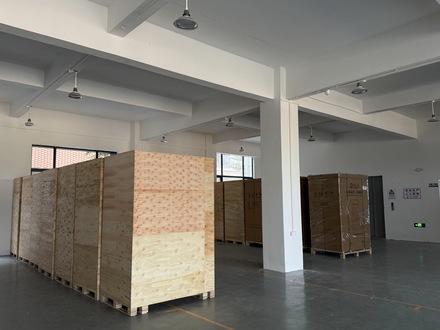
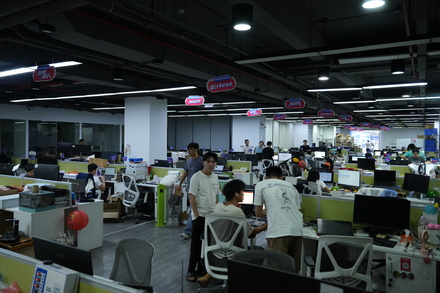
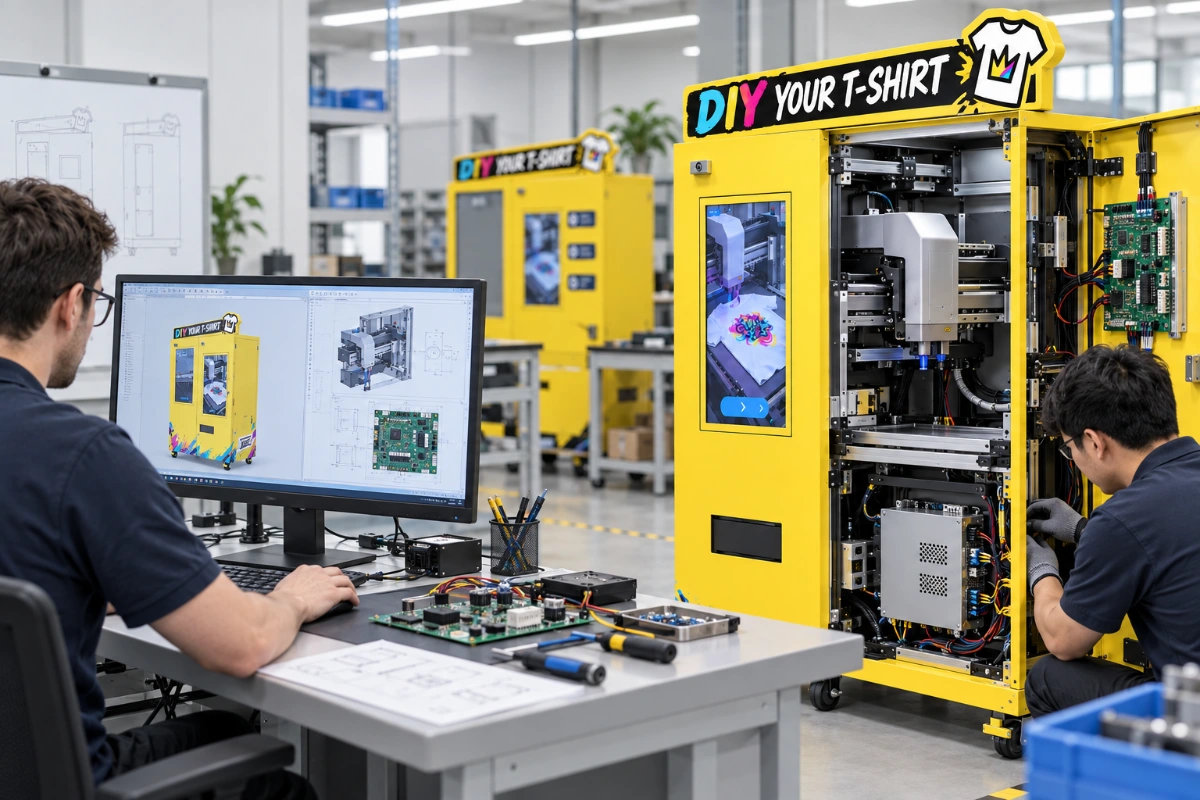
Our team develops and manufactures the core system, motherboard, printer integration and final equipment assembly.
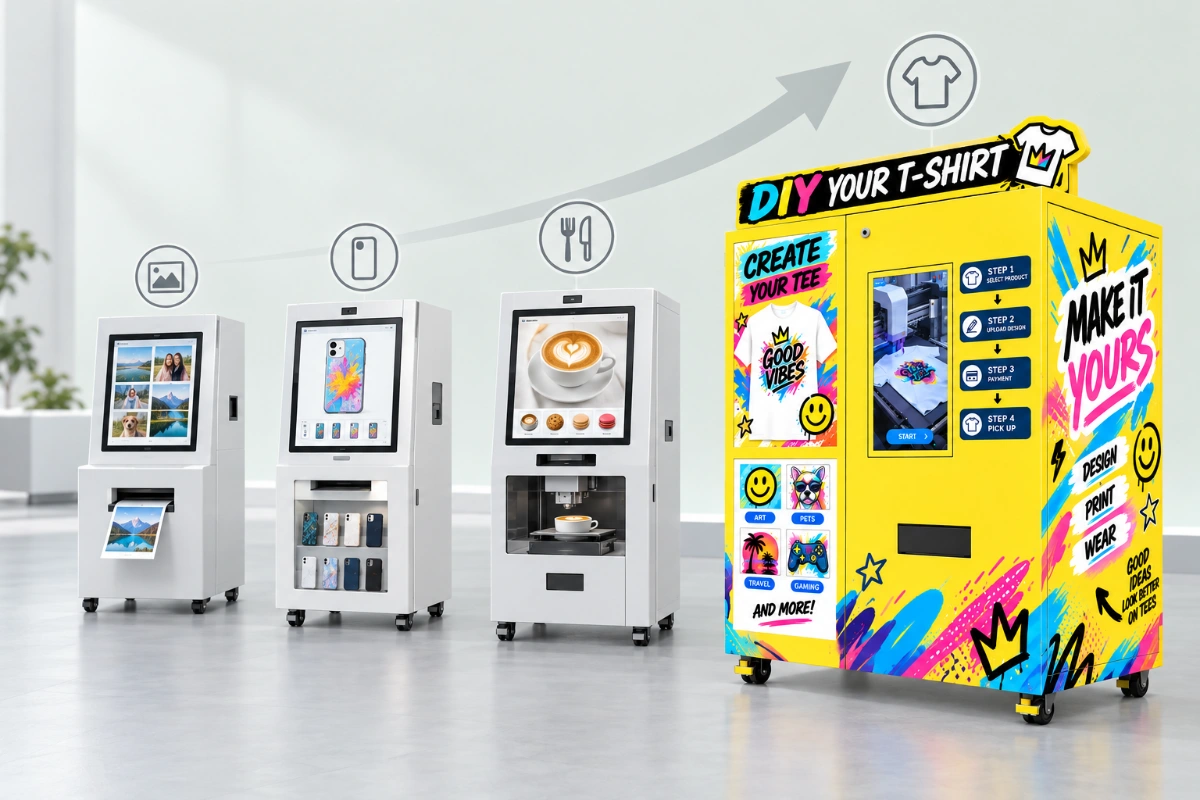
The T-shirt kiosk builds on experience from previous generations of self-service printing equipment, including photo printing, phone case customization, food printing and other automated systems.
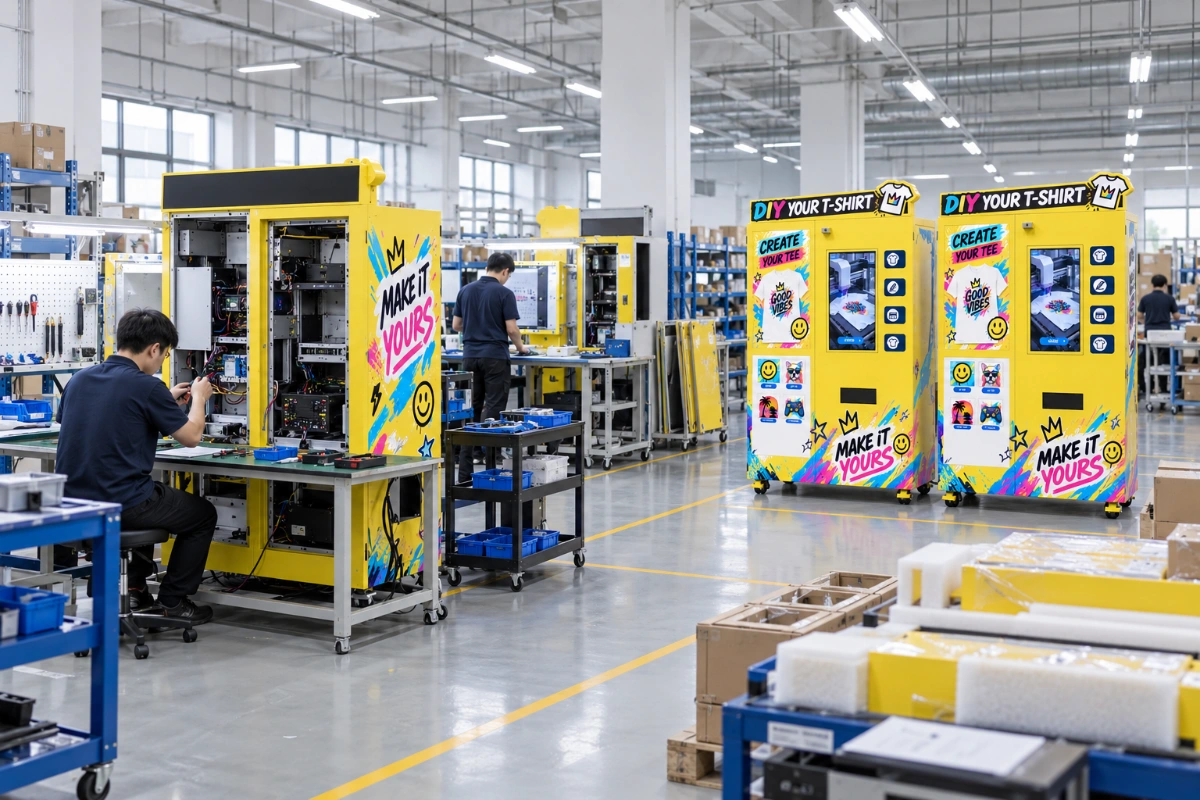
Integrated production, assembly and testing capabilities support equipment development and international delivery.
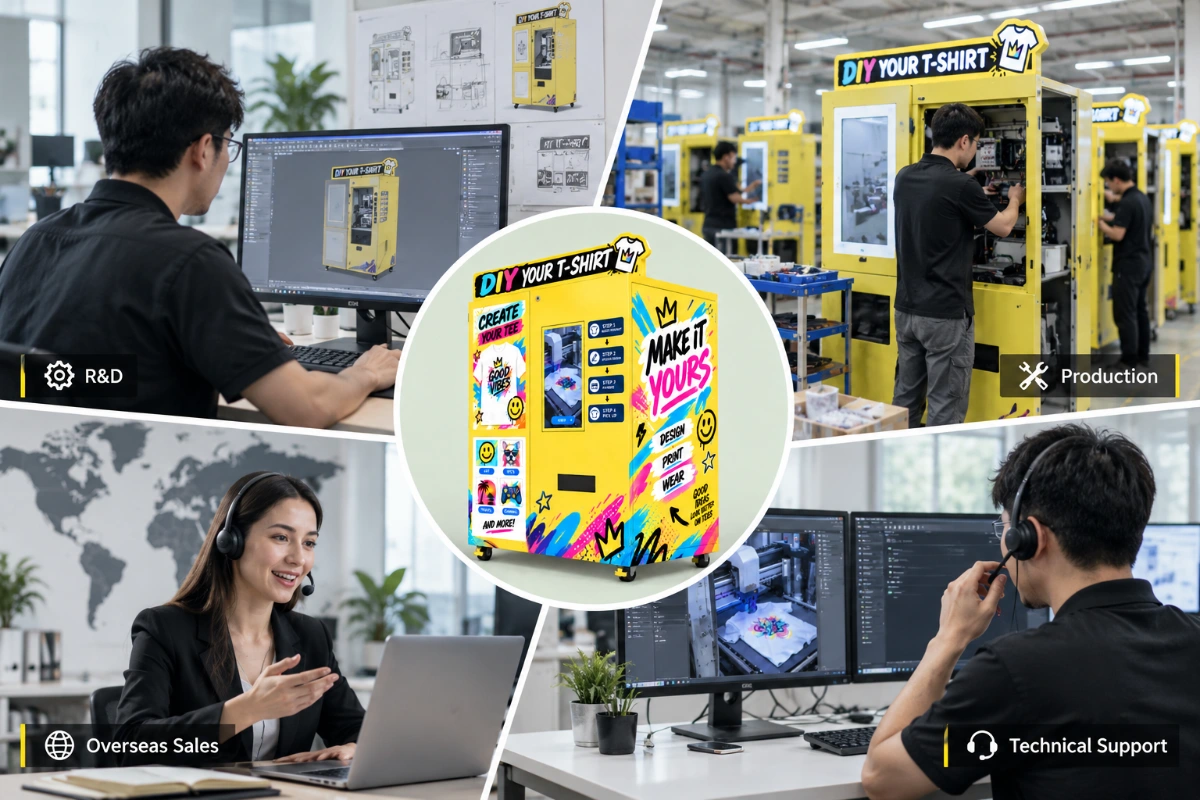
R&D, production, overseas sales and technical support work together across the full equipment lifecycle.
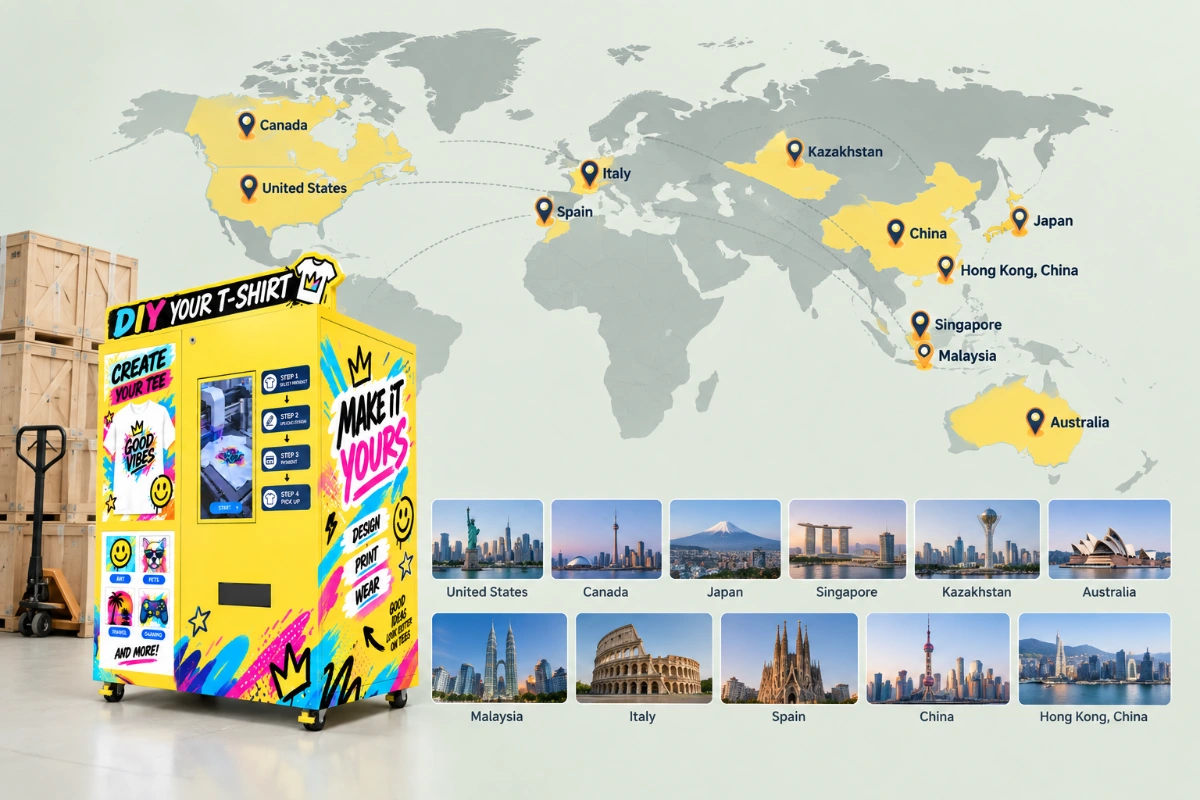
T-shirt printing kiosks have already been sold into markets including the United States, Canada, Japan, Singapore, Kazakhstan, Australia, Malaysia, Italy, Spain, China and Hong Kong, China.
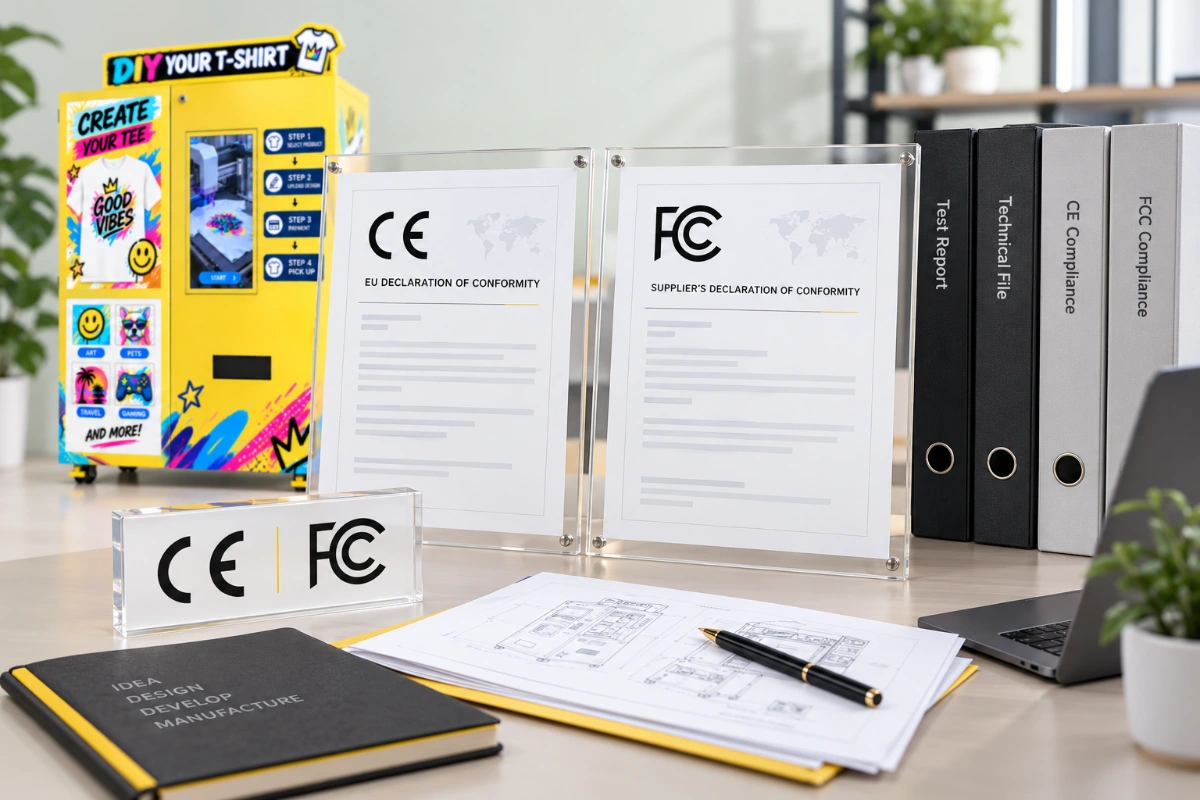
Relevant equipment documentation is available according to configuration and destination requirements.
Pricing depends on the order quantity, payment hardware, exterior customization, starter inventory and shipping destination.
Contact us for a quotation based on your project requirements.
The machine comes with one complete 4 × 1L CMYK ink set, access to our equipment management software and technical training resources.
Garments, gift boxes, optional payment hardware, customized exterior graphics, export packing and international shipping are quoted separately as applicable.
A typical T-shirt order takes approximately 4 minutes, depending on the artwork and operating conditions.
While the machine is printing, other customers can continue preparing designs and submitting orders from their phones. Orders are processed in sequence.
Yes. The kiosk has five configurable product channels, which can be assigned to different sizes or compatible product types.
The total capacity is up to approximately 185 prepared items, depending on garment thickness, packaging and product mix.
Yes. You are not required to purchase all future garments and gift boxes from iGo.
We recommend starting with our tested supplies. You can then test locally sourced garments for print quality and physical compatibility. Locally made gift boxes must meet the machine's required dimensions and structure.
Customers cannot bring loose garments to the kiosk for direct printing; products must be prepared and loaded in advance.
The standard machine prints on one side of the garment and does not automatically flip it.
The artwork can be resized and positioned within the available printing area, including suitable left-chest designs.
Print durability depends on the garment material, artwork and washing conditions.
Our internal testing has shown good overall results with suitable Sorona-blend and cotton fabrics. We can provide printed samples for customers to evaluate the appearance, flexibility and wash performance before purchasing.
The machine uses four 1L bottles of CMYK UV ink.
Under a controlled test using a fixed print size and ink coverage, one complete set produced approximately 900 prints. Actual consumption varies with artwork size, coverage, maintenance and operating conditions.
Yes. The iGo equipment management software is free, with no separate management subscription or iGo sales commission.
Supported AI image enhancement and style-conversion functions are also available without additional usage fees or usage limits.
Payment provider transaction fees and optional third-party payment integration service fees may apply, depending on the selected solution.
Yes. A reliable internet connection is required for normal operation.
Connectivity can be configured using a supported mobile data connection or Ethernet, depending on the machine configuration.
The kiosk can be configured for compatible card payment, cash acceptance and QR code payment solutions, depending on the destination country.
Local payment terminals may also be integrated after technical compatibility testing. Payment provider fees and merchant account requirements vary by market.
The operator can review the failed order and manually issue a refund through the equipment management backend.
Refund handling is supported for integrated payment solutions, including Nayax, compatible local POS systems and StarThing QR payment services. Refunds are operator-initiated rather than automatically guaranteed.
Routine operation mainly involves restocking garments, refilling ink and emptying the waste-ink container when notified.
The machine includes adjustable automatic printhead cleaning to reduce routine manual maintenance. Additional attention may be required if the machine has been powered off for an extended period or a fault occurs.
We provide 24/7 online technical assistance, remote diagnostics, troubleshooting guidance and training videos covering installation, operation, replenishment and common maintenance tasks.
The machine includes a one-year warranty for eligible non-wear components, with lifetime technical assistance.
Consumable and wear parts, including printheads, are excluded from the standard warranty. Covered replacement parts are provided free during the warranty period, while international shipping costs are borne by the customer.
Standard production takes approximately 20 days after receiving the deposit and confirming the machine configuration.
International shipping time depends on the destination, shipping method, customs clearance and agreed delivery terms. Door-to-door shipping quotations are available based on the delivery address.
Tell us your country, target location, quantity and launch plan.
We can help you review the machine configuration, payment solution, starter inventory, customization options and shipping requirements.